


Cuban News August 14 2008. Visit our web site at: (http://havana.usinterestsection.gov/)

You may leave the list at any time by sending an e-mail with the message "SIGNOFF USINTHAVANANEWS-CB" (without the quotes) to LISTSERV@LISTS.STATE.GOV.

Archivos: http://statelists.state.gov/scripts/wa.exe?A0=USINTHAVANANEWS-CB


Castro Marks 82nd Birthday Away From Spotlight (AP, EFE)   

US-Cuba: A Chance For Normal Relations (MH)

Fidel will never admit defeat, Cuban blogger says (EFE)

American youngsters bridge gap with Cuba on an island baseball field (SS)

Informant denies being a Cuban agent (MH)

Playing A Name Game (Newsweek)

Russian Moves in the Americas (Newsweek)

DISSIDENTS SAY INMATES ARE STILL FACING HARSH TREATMENT (IPS/GIN)

Cuba gana primer oro latino(BBC Deportes)  

Del Comandante sólo queda la nostalgia(El Espectador)

Ex gobernante no admite la derrota, según bloguera(EFE)

La libertad antes que el oro(El Pais)

Fidel Castro cumple 82 años sin festejo oficial pero en júbilo por béisbol(AFP)

Ortega envía un mensaje de felicitación por el cumpleaños 82 de Fidel Castro(EFE)

Los cubanos soplan las 82 velas de Fidel(El Pais/Reuters)

CUBA: Santería celebra a Fidel Castro(IPS)

FRANK CALZON: El senador Specter ya no va a La Habana(NH)

El cubano Mijain López redondea su historial con el oro olímpico en -120kg(EFE)

Tres cubanos junto con seis latinos buscan los cuartos de final(EFE)

El cubano Banteaux y el brasileño Silva fueron los triunfadores(EFE)

Cuba vence a Japón en inicio torneo de béisbol olímpico(AP)

Informaciones tomadas de Encuentro en la Red (http://www.cubaencuentro.com/)

Tiempo de cambio(EER)

Yoani Sánchez: Castro nunca admitirá su fracas(EER)

Informaciones de Radio Martí: http://www.martinoticias.com/ 

Algunas informaciones de Radio Martí

Informaciones de Cubanet (http://www.cubanet.org/)

Incomunicada del hijo preso

Encarcelan a disidente

Intoxicados

Sin permiso del muerto

La casa por la ventana

Juanito quiere podrirse en Miami

ea alta

--------------

Radio MartÍ: http://www.martinoticias.com/ 

http://www.solidaridadcuba.org/

Micelaneas de Cuba http://www.miscelaneasdecuba.net/

Bitácora Cubana http://www.bitacoracubana.com/

Revista Consenso  http://www.desdecuba.com/

Convivencia  http://www.convivenciacuba.com/

Revista cubana Amanecer http://www.amanecerdecuba.blogspot.com/

Con Cuba: http://www.concuba.org/


Castro Marks 82nd Birthday Away From Spotlight (AP)  

Thursday, August 14, 2008

AP

Ailing ex-president Fidel Castro marked his 82nd birthday in private on Wednesday, more than two years after he underwent emergency surgery and ceded power to his younger brother Raul.

There were no official celebrations planned, although Cuban workers and other groups sent the revolutionary leader greetings in state media and a group of Santeria priests planned a drum ceremony in his honor.

Cuban Olympic athletes saluted Castro from Beijing, calling him the "team coach, greatest home run hitter and unconquerable gladiator."

Castro's friend and ally Venezuelan President Hugo Chavez sent him a portrait of South American Independence hero Simon Bolivar.

The bearded revolutionary has not appeared in public since July 2006. He permanently resigned the presidency in February, ending nearly a half-century in power.

------

Cuba marks Fidel's 82nd birthday

Havana, Aug 13 (EFE).- The 82nd birthday of former Cuban leader Fidel Castro was celebrated Wednesday with hundreds of messages of congratulations, commemorative pieces in the official press, a children's party in his honor and a Santeria ceremony in which a ceiba tree was planted in the hope that he may enjoy good health.

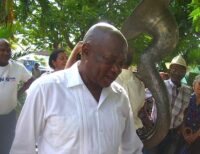
A score of Santeria priests gathered in a Havana park to replant the ceiba (or silk-cotton) tree, which is the sacred tree of that Afro-Cuban cult, after a morning filled with rituals beginning at the time of day that Castro was born, "Santero" Camilo Vives told Efe.

One of the organizers of the ritual explained that Santeria includes the custom of praying for "important people" in the country.

That tradition spurred several groups of Santeros to organize religious ceremonies to ask that Castro enjoy good health, given that in July 2006, he suffered a severe intestinal illness that led him to provisionally cede the presidency to his younger brother Gen. Raul Castro.

That power shift that was made permanent in February of this year.

Fidel's birthday preparations began to be news several days ago on the island.

The armed forces on Saturday held a gala in his honor and the Women's Federation scheduled "days of voluntary agricultural work" for the occasion.

On Tuesday evening, thousands of people attended a concert given by the Cuban group Buena Fe in the historic Plaza de la Revolution. The performance was dedicated to Castro and began with a speech during which young people swore "never to fail him."

The official dailies Granma and Juventud Rebelde published on Wednesday on their front and inside pages numerous birthday congratulations messages, including a "Letter to Fidel from the Cuban workers" and the greetings of five Cuban intelligence agents convicted and imprisoned in the United States for espionage.

The Cuban delegation to the Olympic Games in Beijing sent the former leader a message with their wishes for "health and long life," and they congratulated him "for having been the creator of revolutionary Cuban sport."

"You are the coach of the team, the biggest home run hitter and the invincible gladiator in this immense work in which you have acted as an exceptional strategist, driving force and prophet since its beginning," read the text of the message.

So far, the only official and public party in Castro's honor was held by a group of children at the Ernesto "Che" Guevara Pioneers Palace in Havana.

The children sang for Castro the traditional birthday song before an enormous green birthday cake that bore the message "Happy Birthday, Fidel." EFE arj/bp

------------

US-Cuba: A Chance For Normal Relations (Pérez-Stable, MH)  
Thursday, August 14, 2008
The Miami Herald
By Marifeli Pérez-Stable
Taking the long view on U.S.-Cuba relations isn't easy. In my two most recent columns, I laid out in broad strokes the long historical arc as I see it. My basic point is simple: The United States and Cuba have never had normal relations. To make an eventual rapprochement possible, both need to think outside the box.
As it stands now, U.S. policy is unlikely to bring about a democratic Cuba. Though most in order among adversaries, U.S.-Cuba diplomacy has been notoriously absent under President Bush. In his second term, he has wisely moved his foreign policy toward the center. Cuba, however, remains an exception. In contrast, all U.S. administrations since Gerald Ford's have held talks with Havana.
Confrontation with the United States has been useful to Fidel Castro. Without it, the regime would not be able to conjure up "imperialism" as an excuse for its monumental failures. Thus, Castro has sometimes sought an improvement in relations only to torpedo the prospect at a convenient moment.
Allow family visits
In 1996, for example, the murderous downing of the Brothers to the Rescue planes promoted quick passage of Helms-Burton (or Helms-Castro). A watered-down version would not have served the Fidelista purpose of always painting the United States in the worst possible light.
All the same, the record in the 1970s and in the late 1980s is more ambiguous. While unwilling to sacrifice its activist foreign policy, Havana did manifest a willingness to mend relations with Washington. In the talks that put an end to armed conflict in southern Africa, the United States and Cuba worked together constructively.
I heartily welcome Sen. Barack Obama's promise to grant Cuban Americans unrestricted rights to visit family and send remittances if he wins in November. Should Sen. John McCain be elected, I'd hope he would reconsider the 2004 measures that have so burdened Cuban families across the Florida Straits.
Polarizations create comfort zones where adversaries aren't challenged to do anything differently. For almost five decades, that's where the United States and Cuba have often been.
Let's say the next U.S. administration eases restrictions on travel and remittances. Should Washington ex pect Havana to call for free elections in response? Not if the purpose is to pull back from the line in the sand.
Freeing all political prisoners is, on the other hand, doable. If the United States takes the first step and Cuba does nothing or, worse, continues to throw peaceful opponents in jail, the ball would be in its court. U.S. overtures to the European Union, Canada and Latin America might then find more willing ears.
How can the United States and Cuba learn to live in peace? Not all at once, that's for sure. Slow, incremental steps are needed to build trust, not the kind we have among friends but the kind we need to resolve conflicts.
At the end of the road lies the prospect of normal relations for the first time ever. The United States and a democratic Cuba will not dispel overnight more than half a century of mistrust. That's why the United States needs to gain a consideration of Cuban sensibilities along the way.
Turning the Guantánamo naval base over to a democratically elected president of Cuba would provide Cuban nationalism a psychological victory that would help normalize relations. In the meantime, it is worth remembering Henry Kissinger's words to the U.S. diplomats dealing with Cuba in the mid-1970s: ``Do it like a big guy, not like a shyster."
Cuba, in turn, needs to turn geographic nearness into an asset. Confrontation -- for which Havana also must accept responsibility -- has exacted the heaviest toll from ordinary Cubans. Under Raúl Castro, Cuba remains a dictatorship, but opportunities to ease tensions might still arise. If so, I hope for a useful give and take that helps the Cuban people look beyond their current circumstances.
Two concluding thoughts. Cubans everywhere should finally mind Manuel Márquez Sterling, an early 20th-century diplomat-journalist: "A civic government is the definitive expression of consolidated independence." We should, moreover, be thankful that Cuba is 90 miles from the United States. Ask the Poles how they did for centuries so close to Germany and Russia.
Marifeli Pérez-Stable is vice president for democratic governance at the Inter-American Dialogue in Washington, D.C., and a professor at Florida International University.

--------------

Fidel will never admit defeat, Cuban blogger says

Bogota, Aug 13 (EFE).- Cuban blogger Yoani Sanchez, the winner this year of the Ortega y Gasset Digital Journalism Prize, says that Fidel Castro "will never admit defeat" as long as he has breath in his body.

That is the "concept of victory" Castro has always advocated, Sanchez wrote in an article for the Cuban revolutionary leader's 82nd birthday that was published Wednesday in the Bogota daily El Espectador.

"For him, in his unquenchable sporting spirit, this game doesn't have a time limit, which allows him not to recognize defeat no matter how unfavorable the score may be," added Sanchez, who received the Ortega y Gasset Prize for her blog Generacion Y, which gets about a million hits per month.

Sanchez said that things had been that way since the years before the 1959 revolution, when Castro went to prison after his failed 1953 assault on the Moncada Barracks.

"Only rarely had the will of one man had so much weight in a country. Never before did the will of one man have so much weight in Cuba. His obstinate personality will be historic," Sanchez said.

She recalled that Fidel Castro in 1970 coined the phrase "we're going to turn setback into victory" when he admitted that the government had failed to harvest 10 million tons of sugar cane in contrast to its stated aim, and also that in 1980 he had let "the dregs" of society leave the island, a reference to the Mariel boatlift.

"On the eve of the 50th anniversary of the triumph of the revolution, with all the merits attributed to it and with all the faults blamed on it, it can be said that there are two great truths about the experiment Castro began in Cuba: that it has not collapsed, as had been predicted by its enemies, and that it has not achieved its promised objectives, as its followers had forecast," Sanchez observed.

Castro got sick at the end of July 2006 and provisionally ceded the presidency to his brother, 77-year-old Gen. Raul Castro, a shift that was made permanent in February of this year. EFE jgh/bp

--------------

American youngsters bridge gap with Cuba on an island baseball field

By Ray Sanchez | Havana Bureau

Sun Sentinel

August 14, 2008

Penalver, Cuba - On a rustic baseball diamond surrounded by mango trees and palms, a couple of dozen boys from Cuba and New England on Wednesday put aside decades of bad blood between their countries.

The 11- and 12-year-olds played their third game at a convent east of the Cuban capital despite efforts by Rep. Lincoln Diaz-Balart and others to stop a nine-day visit by the Twin State Peregrines of Vermont and New Hampshire. The game fell, coincidentally, on Fidel Castro's 82nd birthday.

After the Peregrines 6-4 victory, the boys exchanged congratulations and handshakes under a scorching sun.

"I don't know how our countries got so separated but I'd like to see some of these kids come and play in America and see how we live," said Evan Greenwald, 12, a pitcher from Norwich, Vt.

Related links

Cuba Baseball Photos Sporting events between the United States and Cuba were much more common before 2004, when the Bush administration toughened the decades-old U.S. trade embargo to make it harder for Americans to visit the communist island. A Little League team from California visited Cuba in 2000.

The Office of Foreign Assets Control's decision to issue a travel license to the Little League team sparked a spat between lawmakers in South Florida and New England.

But the trip, which was organized with the help of Naples rancher John Parke Wright, has gone as planned, with the boys playing baseball, touring Havana and donating uniforms and equipment to their Cuban counterparts.

"The Cubans have been so nice," said Cyrus Rothwell-Ferraris, a 12-year-old from Norwich, , Vt., who made the trip despite a broken right arm. "The place is different than the U.S. But it's their way of life. It's a totally separate world on this island."

It took the team's head coach, Ted Levin, a nature writer, two years to clear the bureaucratic hurdles and make the trip happen, he said.

Last month, Miami Republican Diaz-Balart asked fellow lawmakers to meet with U.S. State and Treasury officials to discuss the trip. "A sporting event is not an appropriate way to respond to the ongoing torture of political prisoners Yuselin Ferrera, Nelson Aquiar and many others," Diaz-Balart said in a statement.

Sen. Patrick Leahy, a Vermont Democrat, said of Diaz-Balart: "He should pick on somebody his own size."

Parke Wright, who has business dealings with Cuba, was more blunt.

"Diaz-Balart is nuts," he said. "This trip is about connecting and friendship. This is simply about baseball and kids getting to know each other."

Team coach John Carey, a government professor at Dartmouth College, said the players and six chaperons were not spending "anywhere close" to the $166 dollars per person per day allowed under U.S. government regulations.

"The kids are starting to ask some really sophisticated questions about U.S.-Cuba relations and what's the problem," Carey said.

-------------

CUBA

Informant denies being a Cuban agent

One of four people named by a veteran spycatcher as Cuban agents responded to the allegation.

Posted on Thu, Aug. 14, 2008

BY ALFONSO CHARDY

achardy@MiamiHerald.com

Gilberto Abascal, an FBI informant and alleged Cuban government agent, told The Miami Herald on Wednesday that he is not working for Cuban intelligence and that he is loyal to the United States.

''That's all a lie,'' Abascal said about the accusation in a telephone interview.

Abascal's statements were his first since Lt. Col. Chris Simmons named him and three others as Cuban agents during a TV appearance July 31 and in an interview with The Miami Herald.

Of the four, only Abascal had not responded to Herald calls for comment before the story was published Friday. Abascal, however, has denied similar allegations by others in the past.

The other three named by Simmons also denied the allegations.

Simmons is a reserve Army counterintelligence officer and former counterintelligence analyst on Cuba at the Defense Intelligence Agency.

He played a key role in the 2001 arrest of Cuban spy Ana Belén Montes.

In the Miami Herald interview, Simmons said he had concluded Abascal was a Cuban agent because of information the FBI had submitted in court in connection with an arms case against Hialeah developer Santiago Alvarez, a benefactor of Cuban exile militant Luis Posada Carriles.

''And when you go through his records, he is in contact with Cuban intelligence officers at the [Cuban] interests section, which the FBI conceded,'' Simmons said.

``They couldn't explain it, but they acknowledge he's in contact.''

Abascal said he was never in contact with anyone at the Cuban Interests Section and that the only Cuban official who contacted him ''three or four times'' probably called from Cuba. Abascal said he refused to talk to the caller and reported the contact to the FBI.

The Miami Herald has reported previously that an April 6, 2006, letter from federal prosecutors acknowledged that Abascal met with a Cuban official known as ''Daniel,'' and perhaps others, at least six times.

-----------

Newsweek

August 25, 2008 

International Edition

Playing A Name Game;

Why ask why? Lots of Cuban monikers are unusual, and many begin with the 25th letter of the alphabet.

BYLINE: By Joseph Contreras

Dayron. Yampier. Yankiel. Yordenis. Yulieski. Eglis. Idel. These are just some of the stranger given names to be found among the 149 athletes representing Cuba at this year's Summer Olympics in Beijing, and they spotlight a quirky custom practiced by many of the island's 11 million inhabitants: a penchant for giving newborns unusual, custom-made monikers, many of them beginning with the 25th letter of the English alphabet.

This trend goes back years. Among the gold-medal-winning pugilists of Cuba's illustrious Olympic past are heavyweight Odlanier Solís, flyweight Yuriorkis Gamboa and light flyweight Yan Barthelemy. And the phenomenon goes beyond athletics. The island's best-known antigovernment blogger is a 32-year-old philologist named Yoani Sánchez, and the parents of the once famous shipwrecked boy Elián González came up with his handle by fusing their own (Elisabeth and Juan).

Why is this? Sánchez theorizes that in one of the world's last remaining Stalinist regimes, fashioning a bizarre name from whole cloth has been one safe way of flexing creative muscles without running afoul of the authorities. "Cuba is a country where everything was rationed and controlled except the naming of your children," she says. "The state would tell you what you would study and where, and creating names was a way of rebelling." Jaime Suchlicki, a Cuba expert at the University of Miami, says many middle-aged Cubans spent their youth fighting Fidel Castro's proxy wars in Ethiopia and Angola and may have given their kids African-sounding names in tribute to the continent. Similarly, the preponderance of names starting with the letter Y may reflect the contact Cubans had with Russian advisers sporting names like Yuri and Yevgeny in the years when the Soviet Union was bankrolling Castro's revolution.

Cubans on both sides of the Florida Straits associate the practice with the Communist era. Suchlicki spent his formative years in pre-revolutionary Havana, and says his friends, relatives and neighbors all went by traditional, Spanish-language names. He left the island a year after Castro ousted a U.S.-backed dictator in 1959, and says the growing popularity of unconventional names among his younger countrymen came to his attention only after Castro had consolidated his grip on power. He speculates that this preference for unusual names might signify a denial on some level of the country's Spanish Roman Catholic heritage. "This may be a rejection of the Spanish past since Cuba is much more black today than it once was," he says, noting that an estimated 62 percent of all Cubans are of African descent (up from 40 percent 50 years ago)

The trend is not confined to Cuba within Latin America. Female weight lifter Yudelkis Contreras is one of 23 athletes representing the Dominican Republic in Beijing. And Venezuela's female softball team will include Yaicel Sojo and Yurubi Alicart. But no country in the region comes close to Cuba in the weird-name contest, a fact of life that has bedeviled some of the island's leading sports chroniclers. The legendary Cuban sportswriter and broadcaster Eddy Martín once claimed to have counted 400 baseball players whose given names began with the penultimate letter of the alphabet. "Yuniel, Ynieski, Yulieski, Yolexis, Yusian, Yoanni, Yumiel, Yadel, Yoneiki, Yunior, Yusded, Yinier, Yusnel," a weary Martín once told an interviewer. During live broadcasts he was sometimes known to set the stage for the next batter by muttering "And now to the plate comes another impossible name." Martín died in 2004, but he'd likely be grumbling still today, given the names of the Cuban delegation at this year's Olympics--though at least for onomastic innovation, the Cubans would certainly bring home the gold.

PUBLICATION-TYPE: Magazine

-----------

Russian Moves in the Americas

Russia's push into the region could force others into an arms race that no one wants or can afford.

Newsweek

BYLINE: By Jorge Castañeda; Castañeda is Mexico's former foreign minister and Global Distinguished Professor at New York University.

Russian Prime Minister Vladimir Putin's surprising announcement in early August that his country would seek to "re-establish" ties with the Soviet Union's old allies in Havana stirred up excitement in many foreign newsrooms, and raised eyebrows in a few foreign ministries around the world. Coming in the wake of a three-day visit to Cuba by a high-level Russian delegation, led by Deputy Prime Minister Igor Sechin, and of reports about the possibility of the Russian military's using the Caribbean island as a fueling station for its Bear bombers, which are capable of carrying nuclear weapons, the flurry of news evoked memories of the 1962 missile crisis and a new "threat" to the United States from across the Florida Straits.

In fact, there is probably much less here than meets the eye. Putin and Russia in general seem quite upset, and have said so, about the Bush administration's decision to establish a "missile shield" in the Czech Republic (and perhaps Poland) that would theoretically be a protection from all parties, but is seen from Moscow as a threat to Russia. Sending a delegation to Cuba and talking up the possibility of nuclear bombers landing or being stationed on the island appears to be a quite classical countermove, reminding Washington that two can tango, and that one of the outcomes of the Cuban missile crisis, at least according to the Russians, was the removal of U.S. missiles from Turkey--in other words, from close to Soviet territory.

Moreover, there are reasons for believing that the Cubans were neither a party to the threat nor particularly enthralled by it. They were quite displeased in 2001 when Moscow, without notice and in response to U.S. pressure, shut down the Lourdes eavesdropping and surveillance station, for which the Soviet Union and Russia had paid big bucks. Without a clear explanation about what these "new ties" would mean and a guarantee that the Lourdes precedent would not be repeated, it would seem unlikely that Havana would go along. The fact that no Cuban official, except Fidel Castro in his weekly editorial in Granma, and in a very convoluted way, mentioned the entire issue casts doubt as to how much Raúl Castro is truly committed to this new proposal.

Raúl is probably quite reluctant, because the kind of high-stakes grandstanding that the young Fidel Castro and Nikita Khrushchev indulged in in 1962 is exactly the opposite of what he apparently desires in foreign policy. If anything, Raúl would prefer to avoid the limelight or any unnecessary conflict, and concentrate on resolving what is clearly, by his own admission, a disastrous internal economic and social situation. He would go along with this sort of shenanigans only if either Washington turns it into a matter of pride or if the Russian request were accompanied by a substantive economic payoff that would allow Cuba to reduce its life-or-death dependence on Venezuela and its friendly, complicit but increasingly erratic and precarious leader, Hugo Chávez.

Indeed, at base, this is perhaps what all the fuss is really about. Raúl Castro was around in 1962; he headed the Cuban armed forces then, as he does now. He and his older brother (at least today) know just how dangerous these kinds of games can become. Unfortunately, Chávez does not, and Raúl Castro does not have the type of intellectual or emotional influence over the Venezuelan that Fidel does, or did. Chávez could buy into a scheme such as the one the Russians are insinuating, and in fact, he is already participating in a small part of it. He was in Moscow on July 22, and signed more arms deals beyond the immense ones he had already sealed last year. He is calculated to have already bought between $2 billion and $3 billion in arms from Moscow, and he and Russian President Dmitry Medvedev announced that Venezuela would purchase up to $30 billion in military goods from Russia over the next six years, including planes, submarines, tanks and Kalashnikovs.

This is a staggering sum, but of course, knowing Chávez, it may or may not ever occur. The price of oil may continue to drop; Moscow may back off if it cuts a deal with Washington on the antimissile system in Europe, and Chávez himself may not be in office forever. Still, Caracas is where the Russian push into Latin America could work, and the consequences for the military equilibrium in South America (Venezuela borders on Colombia, Guyana and Brazil) and in the Caribbean would be severe, forcing others into an arms race no one wants or can afford.

It would not be a bad idea for either this U.S. administration, or, more likely, the next one, to take up the Venezuelan matter with Putin and Medvedev. Similarly, it would be wise for Washington to refrain from any tough talk or humiliating language directed at Havana. That only riles the Cubans, and has on occasion led them, foolishly but predictably, to do things they probably would have preferred to avoid.

Castañeda is Mexico's former foreign minister and Global Distinguished Professor at New York University.

-------------

CUBA: DISSIDENTS SAY INMATES ARE STILL FACING HARSH TREATMENT

By Patricia Grogg  

HAVANA, Aug. 12, 2008 (IPS/GIN) -- Former death row inmates in Cuba have had their sentences commuted to life imprisonment or 30 years in jail, but they are still facing subpar jail conditions, a dissident organization complained on Tuesday.

"The announcement was made five months ago, but they're still being meted out the same punishment," Elizardo Sánchez said after the launch of the Cuban Commission for Human Rights and National Reconciliation's six-monthly report on human rights in this Caribbean island nation.

Sánchez, the leader of the commission, said his statement was based on the testimony of family members and even some inmates who telephoned the organization from jail.

The prison regime is austere, but the prisoners are allowed visits every four months, he acknowledged.

Cuban President Raúl Castro announced in late April that a group of convicts facing the death penalty, some of whom have been waiting for years for a pronouncement by the Council of State, will now serve life sentences or 30-year terms instead.

Sánchez said this decision was "positive," although he deplored the lack of "public information" about how many prisoners would benefit from the measure, and how many would serve 30 years or be behind bars for life.

"Our commission had to make inferences to estimate that between 20 and 30 people sentenced to capital punishment had their sentences commuted, and about half of these will serve life sentences," said the commission report signed by Sánchez, where he is described as a "human rights observer and former prisoner of conscience."

The statement, distributed to foreign correspondents in Havana, said it is "disturbing" that prisoners who had their death penalties commuted are still being held under harsh conditions, pointing out that some have been in isolation for more than 10 years.

The government's handling of the death penalty issue remains "very conservative," and there are still dozens of crimes to which capital punishment still applies. "It's a sword of Damocles hanging over Cubans," Sánchez said.

Nevertheless, the decision to commute the death penalty reaffirmed the de facto moratorium on capital punishment that has been in force in this country since 2003, after three men who hijacked a passenger ferry were executed by firing squad.

Since then no death sentences have been handed down by the courts and no new executions have been carried out.

The Cuban government argues in favor of keeping the death penalty on the books as a legal weapon to defend the country from foreign aggression and from possible domestic attempts to undermine the state, as well as to protect the population from the most heinous crimes.

In line with this argument, Havana links the possible abolition of the death penalty to a cessation of the U.S. policy of "hostility and terrorism" and the four-decade U.S. economic embargo, according to official documents such as a 2004 letter from Cuba to the United Nations Human Rights Council.

"We have been forced to choose, in legitimate defense, the route of establishing and enforcing severe laws against our enemies, but always strictly within the framework of the law and with respect for legal guarantees," Castro said in April at the closing session of a plenary session of the Communist Party Central Committee.

The commission's report indicates that between January and July this year, the commission documented 219 cases of political prisoners, 15 fewer than the 234 it identified in 2007. But the real figure could be higher, due to the hermetic nature of the regime which does not permit "any kind of scrutiny," the dissident group said.

The authorities do not generally reply to the organization's reports, nor do they provide any statistics on the prison population.

But Sánchez declared that "short-term" detentions have increased, and the commission has also documented mistreatment at the hands of the police, something he said had been avoided in the past.

The document names 219 people who are serving prison sentences or are awaiting trial and also mentions 67 "Cuban prisoners of conscience adopted by Amnesty International who are still serving their sentences." Ten of these are under house arrest, rather than in prison, for health reasons.

The list includes three persons sentenced to death whose appeals to the Supreme Court will be analyzed soon, Castro said in his April speech. Two are Salvadorans -- Raúl Ernesto Cruz and Otto René Rodríguez -- who were convicted of terrorism in 1998 after taking part in a series of bombings of tourist facilities in Cuba, one of which resulted in the death of an Italian businessman.

The third is Humberto Eladio Real, a Cuban arrested on Oct. 15, 1994, after disembarking on the island, committing a murder and stealing his victim's car. He was tried and convicted of murder and acts against the security of the state.

----------

Cuba gana primer oro latino 

BBC Deportes 

Mijaín López se impuso en la final de la lucha grecorromana. Minutos antes, su compatriota la yudoca Yalennis Castillo le acababa de dar la tercera medalla de plata a Cuba.

LUCHA GRECORROMANA

¡La esperanza de oro cumplió!

El abanderado de Cuba, Mijaín López, superó al ruso Khasan Baroev, campeón olímpico, en la final de la lucha grecorromana de 120 kilos.

La rivalidad entre ambos luchadores tiene ya una larga historia.

En 2004, Baroev había eliminado a López en los cuartos de final en Atenas, y lo había dejado en quinto lugar.

López también cayó ante el ruso en el Campeonato Mundial de 2006.

Sin embargo, el cubano de 25 años consiguíó la revancha al vencer a Baroev en 2007, y ahora en Pekín se corona nuevamente.

El caribeño venía de vencer al sueco Jalmar Sjoberg 3-0 en la semifinal.

El bronce fue para el armenio Yuri Patrikeev.

JUDO

 Yalennis Castillo llegó a la final de los 78 kilos, tras vencer a la coreana Gyeongmi Jeong.

En la final se enfrentó a la china Yang Xiuli, quien venía de derrotar a la española Esther San Miguel.

El bronce se lo llevaron la francesa Stephanie Possamai y la coreana Jeong Gyeong-Mi.

--------

Fidel Castro cumple este miércoles 82 años, hace dos está alejado de la vida pública cubana

Del Comandante sólo queda la nostalgia

Por: Yoani Sánchez /Especial para El EspectadorLa Habana

Yoani Sánchez,  ganadora del premio Ortega y Gasset por su blog ‘Generación Y’,  escribe para El Espectador su visión de la Cuba de hoy. Dice que mientras le quede un soplo de vida, Fidel no se considerará vencido.

Fidel Castro llega hoy a los ochenta y dos años. Será la tercera vez que celebre su cumpleaños alejado del público. No soplará las velas sobre un gran pastel rodeado de niños, no brindará con los trabajadores destacados, ni recibirá el baño de multitudes. Tampoco escuchará su nombre coreado como una mágica invocación. No estarán con él dos de sus armas predilectas: las cámaras y los micrófonos. Probablemente, ni siquiera sus hijos y nietos puedan acercársele para decirle al oído la cosa más simple del mundo: “Felicidades”.

Desde su cama de enfermo en una habitación estéril, la pantalla de un televisor será su precario contacto con la realidad. Frente a ella, después de tantos años de haber sido protagonista, aprende ahora el papel de espectador.

Se escribirán muchas crónicas referidas a su persona y al símbolo en que se ha convertido. No tantas como cuando cumplió los ochenta hace dos años en medio de una gran incertidumbre sobre sus posibilidades de vencer la muerte. Fueron muchos los que se adelantaron entonces a escribir el panegírico definitivo y no pocos se sintieron tentados a buscarle un epitafio. Como suele ocurrir con los individuos de su especie, con tantos beneficiarios y con tantas víctimas, lo que se diga sobre él oscilará siempre entre la apología y el improperio.

Más allá de la natural inquietud sobre cuánto le queda de vida, las principales preocupaciones de Fidel Castro son el destino de su obra y el juicio que sobre él hará la historia. Ambas cosas están ligadas de forma indisoluble. El país que ha heredado a su hermano, como si fuera un feudo, sufre una profunda crisis económica, política y social. Para salir de este atolladero parece imprescindible realizar cambios. Muchas de las transformaciones que añora la población demandan un rompimiento, un acto público de retractación, que sirva como garantía de que no se volverán a cometer las mismas faltas.

La ausencia de un compromiso político con estos cambios, que ya se demandan a viva voz, daría la impresión de que lo único que se pretende hacer es una corrección cosmética para mantenerse al mando. Sin embargo, llevar la crítica a sus extremos podría ser demoledor para quien, por haber detentado el poder de forma absoluta e indiscutible, es considerado el causante de todos los logros, pero también el culpable de todos los errores.

Con frecuencia el diario Granma, órgano oficial del Partido Comunista, publica la “reflexiones del compañero Fidel”. A veces pasan dos semanas que no aparecen, o salen tres de forma consecutiva. En ellas Fidel Castro se refiere a cualquier tema: la crisis energética mundial, el lanzamiento de un submarino inglés, su correspondencia con Milosevic, la situación en Corea del Norte o la deserción de deportistas. Habla de todo menos de los presumibles cambios que necesita la sociedad cubana.

En ocasiones da la impresión de que conspira contra ellos. De hecho, el no mencionarlos es más que suficiente para enviar un mensaje de desaprobación.

Determinar de forma científica lo que quiere la gente resulta muy difícil en un país sin encuestas independientes. En la calle primero como un murmullo y cada vez más abiertamente— el pueblo exige lo que el máximo líder siempre le ha impedido tener: derechos civiles y políticos, junto a libertades económicas.

La mayoría no lo define de esa forma genérica, sino que envuelve sus pedidos con frases de menor vuelo como “lo que yo quiero es no tener que pedirle permiso al Estado para salir del país y poder regresar cuando quiera”, “sería bueno que un ciudadano normal no tenga que movilizar toda su valentía personal para opinar diferente al gobierno” o “si me dejaran, podría organizar con mi familia y mis amigos una pequeña empresa”.

Algunas de esas conquistas son tan triviales que no se entienden fuera de Cuba. En la larga lista de los reclamos se halla la posibilidad de poder comprar un carro en un concesionario, solicitar un teléfono o servicio de internet, alquilar un bote para pescar junto a la costa, invitar a un pariente del interior a que pase un tiempo en casa, adquirir una revista o un periódico extranjero, tener una antena satelital, fundar un club de filatelia y otras tonterías que le dan a las personas la sensación de ser un individuos con derechos y, por qué no, con ambiciones.

Los cubanos quieren ser, en fin, ciudadanos que puedan vivir decentemente de lo que obtienen con su trabajo y que se les permita protestar cuando lo que ganan no les alcance. No soportan seguir siendo soldados que deben conformarse con el uniforme y que paran en firme ante la voz de su comandante. La gente también parece estar harta de tener un poderoso enemigo permanente. Eso es, en fin de cuentas, lo único que justifica que se tengan que comportar como soldados.

En vísperas del aniversario 50 del triunfo de la Revolución, con todos los méritos que le atribuyen y con todos los vicios que le achacan, se pueden decir dos grandes verdades del experimento que inició Castro en Cuba: que no ha colapsado, como presagiaron sus enemigos, y que no ha alcanzado los objetivos prometidos, como vaticinaron sus seguidores.

Aquel intento de construir una sociedad justa y próspera habitada por el hombre nuevo demostró ser una quimera inviable. Pero el concepto de victoria, propugnado por el máximo líder de la revolución, ha sido que mientras le quede un soplo de vida no se considerará vencido. Para él, en su inquebrantable espíritu deportivo, este juego no tiene un tiempo límite, lo que le permite desconocer la derrota por desfavorable que sea el marcador.

Así fue en 1953, cuando tras arruinarse el plan de asaltar la segunda fortaleza militar del país, fue a la prisión con la promesa de continuar la lucha. En 1956, después del naufragio con el que concluyó su malograda expedición en el yate Granma, al contar 12 hombres y 7 fusiles exclamó eufórico: “Ahora sí vamos a ganar la guerra”. Su crónico voluntarismo hizo que en octubre de 1962, después que Nikita Krushov decidió —de forma unilateral— retirar los cohetes con cargas atómicas instalados en la isla, declarara: “Los cohetes morales no serán desmantelados jamás”.

El obstinado optimismo del que hace gala lo llevó en 1970, tras el fracaso de no poder realizar la ansiada cosecha de 10 millones de toneladas de azúcar, a enunciar la frase: “Vamos a convertir el revés en victoria”. Hasta en 1980, luego de que más de cien mil cubanos huyeron del país por el puente marítimo de Mariel a Miami, terminó por decir: “Que se vaya la escoria, que se vaya”. Pocas veces la voluntad de un hombre ha pesado tanto en una nación. Nunca antes la voluntad de un hombre pesó tanto en Cuba. Su personalidad obstinada será histórica.

Pero la naturaleza y la historia son todavía más testarudas que él y tienen otra opinión. Las nuevas generaciones olvidarán su voz y su discurso. El obstáculo que representa su porfiada resistencia desaparecerá. Otros sueños, menos caros pero más viables, serán emprendidos, aunque nunca lo entiendan fuera de Cuba los que ven a esta Isla como un ejemplo.

Al principio todavía habrá espacio para la alabanza de su inmensa figura: “El hombre que resistió el embate de diez administraciones norteamericanas, que supo perseverar cuando todos se rindieron y que poseía una energía a la que se le atribuyó incluso la detención de huracanes. Un político con una sorprendente larga visión y con la infinita suerte de encontrar siempre un apoyo providencial”. Luego vendrán los análisis serenos, la desclasificación de su papelería, los testimonios incómodos y tarde o temprano llegará la diatriba.

Quedará la nostalgia y el 13 de agosto del 2026 habrá libertad, incluso para que en un pequeño teatro, un reducido grupo de nostálgicos celebre su centenario.

----------

Ex gobernante no admite la derrota, según bloguera

Publicado el jueves 14 de agosto del 2008

EFE/BOGOTA

La filóloga y ''bloguera'' cubana Yoani Sánchez, galardonada este año con el premio Ortega y Gasset en la categoría de Periodismo Digital, opina que Fidel Castro ''no se considerará vencido'' mientras ``le quede un soplo de vida''.

''Ese es el ``concepto de victoria'' que siempre ha propugnado Fidel Castro, escribió la filóloga en un artículo con motivo del aniversario número 82 del líder de la revolución cubana que publicó ayer el diario El Espectador, de Bogotá.

''Para él, en su inquebrantable espíritu deportivo, este juego no tiene un tiempo límite, lo que le permite desconocer la derrota por desfavorable que sea el marcador'', añadió Sánchez, que recibió el Ortega y Gasset por su blog Generación Y, que recibe un millón de visitas al mes.

La cubana recordó que ha sido así desde los tiempos previos a la revolución de 1959, cuando Fidel Castro fue a prisión tras fracasar en el asalto a la segunda fortaleza militar de la isla. Según ella, ``pocas veces la voluntad de un hombre ha pesado tanto en una nación. Nunca antes la voluntad de un hombre pesó tanto en Cuba. Su personalidad obstinada será histórica''.

En la nota, la filóloga recordó que Fidel Castro acuñó en 1970 la frase ''vamos a convertir el revés en victoria'' al admitir el fracaso de no cosechar los diez millones de toneladas de azúcar que se había propuesto para entonces, y también que en 1980 aceptó que ''la escoria'' se fuera de la isla, en alusión al puente marítimo de Mariel a Cayo Hueso.

''En vísperas del aniversario 50 del triunfo de la Revolución, con todos los méritos que le atribuyen y con todos los vicios que le achacan, se pueden decir dos grandes verdades del experimento que inició Castro en Cuba: que no ha colapsado, como presagiaron sus enemigos, y que no ha alcanzado los objetivos prometidos, como vaticinaron sus seguidores'', observó Sánchez.

--------

REPORTAJE: PEKÍN 2008 - Yudo

La libertad antes que el oro

La yudoca cubana Yurisel Laborde eligió vivir en Miami y renunciar a los Juegos

JUAN-JOSÉ FERNÁNDEZ - Miami - 14/08/2008 El Pais

La final femenina de yudo de menos de 78 kilos tendrá una ausencia sensible. Yurisel Laborde, bronce en Atenas 2004 y doble campeona mundial en 2005 y 2007, era la gran favorita. Pero prefirió la libertad y el amor a la medalla de oro en Pekín. Una difícil elección que sólo se explica en el complejo contexto cubano. La carrera de Laborde está prácticamente terminada. A sus 28 años, y aunque dentro de uno pueda tener la residencia estadounidense gracias a la ley de Ajuste Cubano y en poco más la nacionalidad, no podrá competir hasta que pasen cuatro. Difícilmente podría clasificarse para los Juegos de 2012.

Aunque Cuba pudo inscribir a otra yudoca, Yalennis Castillo, ella era la gran favorita. A primeros de mayo se disputaron en Miami los Campeonatos Panamericanos. En ellos se debían ventilar las últimas plazas para los Juegos. Laborde ya estaba clasificada, pero participó junto al resto del equipo. La llegada de la delegación provocó las habituales protestas de los más recalcitrantes anticastristas. Cuando alguien relacionado con el régimen cubano aparece por el centro del exilio, la expectación es moneda común.

La interminable lista de deportistas que han desertado en el extranjero es proporcional al de ciudadanos comunes. La presencia de todo un equipo completo de yudo abrió la incógnita de si alguno se quedaría. Precisamente Laborde fue la más rotunda al insinuar a los periodistas la posibilidad de una deserción. "Aquí no se queda nadie. No se me ha perdido nada en este país", dijo.

Sin embargo, a los pocos días, tras ganar la competición con gran facilidad, dejó el hotel Hyatt y se escondió en Orlando con su novio, otro yudoca puertorriqueño, clave para convencerla. Ella no lo ha mencionado y sólo ha hablado de buscar "la libertad y una vida mejor". En Cuba, pese a haber sido dos veces campeona del mundo, no se veía recompensada.

"No he podido tener ni una casa ni un carro [coche]. Uno trabaja por un objetivo y, después de tantos años, uno se da cuenta de que fue en vano", afirmó Laborde, que ha pedido asilo político en Estados Unidos.

"Para un atleta de mi nivel es una vida muy dura, muy sacrificada y sin que veas fruto alguno. He estado 12 años en el equipo nacional, rindiendo al máximo, he visto a mi madre dos veces al año, siempre concentrada, y no me ha compensado", abundó la yudoca.

También reconoció que había llegado de Cuba con la idea ya de quedarse, pero que no estaba segura. Muchos cubanos de Miami la acabaron de convencer. Yurisel dejó una carta de despedida a su entrenador, Rolando Veitia, "esperando que algún día le pudiera perdonar".

Veitia expresó una curiosa opinión sobre el caso: "Esperábamos una huida masiva, tal como pasó con la selección de fútbol en el preolímpico [en Tampa se fueron siete jugadores y Cuba debió jugar un partido con 10]. Que haya sido una sola atleta no está tan mal. La verdad, no esperaba eso precisamente de ella, luchamos para que pudiera venir... Pero bueno, le deseo que le vaya bien".

---------

Fidel Castro cumple 82 años sin festejo oficial pero en júbilo por béisbol

Por Isabel Sánchez AFP - jueves, 14 de agosto, 05.40LA HABANA (AFP) - Fidel Castro cumplió este miércoles 82 años, fuera del gobierno de Cuba pero con influencia y peso histórico, sin festejo oficial y bajo una lluvia de elogios, en medio del júbilo de los cubanos por la victoria en béisbol en los Juegos Olímpicos de Pekín.

(Publicidad)

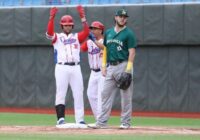
Máximo líder de la revolución y gobernante por 48 años, pasa su aniversario, el tercero desde que enfermó en julio de 2006, en un sitio no revelado donde convalece de una enfermedad intestinal y donde, de seguro, no perdió un minuto del partido de béisbol en que Cuba derrotó 4x2 frente a Japón.

"Este es el mejor regalo que podíamos darle", dijo desde Pekín el manager del equipo de béisbol de Cuba, Antonio Pacheco. La victoria frente a China en voleibol femenino 3x2 también le fue dedicada.

Y es que el cumpleaños cayó en plena locura por los Juegos. "Yo no dormí esperando el juego de pelota. Estamos felices", dijo una empleada de limpieza de un edificio de La Habana Vieja.

Aunque el Gobierno no convocó expresamente a una celebración, la conmemoración arrancó a la medianoche con un concierto en la Plaza de la Revolución, y el enlace de los canales de televisión con imágenes históricas del líder.

Ataviados con sus pañoletas rojas y azules, escolares partieron un enorme pastel en el Palacio Ernesto Guevara, tras corear al unísono: "Felicidades Comandante en tu día, que lo pases con sana alegría, muchos años de paz y armonía".

Deportistas que representan a Cuba en Pekín, trabajadores y jóvenes comunistas le enviaron mensajes de felicitación, desplegados en los medios de prensa locales, todos bajo control estatal, y santeros realizaban un ritual para desear "larga vida a Fidel".

Esta vez, a diferencia de los anteriores dos cumpleaños, nadie rumoró de una posible reaparición de Castro, en fotos o videos. Los cubanos se acostumbraron ya a su ausencia pública.

Capaz de desatar pasiones extremas, este hombre de aplastante personalidad es admirado por unos como símbolo de coraje político, que hizo una revolución en las narices de Estados Unidos, pero odiado por otros como un autócrata que controló la vida de 11 millones de cubanos.

Opositores en el exilio se manifestó en Madrid para celebrar lo que llamaron el "último cumpleaños del dictador", en tanto que disidentes en La Habana minimizaron la fecha. "Para mí no significa nada, ha mantenido el odio como proyecto en todos estos años", dijo Vladimiro Roca.

"¡Feliz cumpleaños Fidel, padre nuestro!", expresó el presidente de Venezuela, Hugo Chávez, al anunciar una gala de celebración. El mandatario nicaragüense Daniel Ortega destacó su "ejemplo", "ética" y "sabiduría".

Aunque lleva dos años sin aparecer en público y sus últimas imágenes de video fueron difundidas en junio, precisamente junto a Chávez, Castro hace sentir su peso político desde sus artículos de opinión que publica en la prensa y en internet.

En su última "reflexión", apoyó a Rusia en el conflicto en Georgia. "¿Qué hago yo? Coopero reuniendo noticias y datos y haciendo análisis sobre los más agudos problemas internacionales que aporto" al gobierno, dijo recientemente.

Observadores y opositores creen que es más que asesor internacional del gobierno, y le atribuyen un congelamiento de los cambios que empezó Raúl cuando asumió la presidencia en febrero.

Castro conserva su poderoso cargo de primer secretario del Partido Comunista, y a pesar de que cedió su título de "Comandante en Jefe" sigue siendo llamado como tal por los cubanos, los funcionarios y el propio Raúl.

"Comandante en Jefe solo hay uno", dijo una vez Raúl, quien pidió permiso al Parlamento para consultarle a su hermano las decisiones claves para la marcha del país.

Hijo de un inmigrante gallego devenido terrateniente y de una humilde campesina cubana, nacido el 13 de agosto de 1926 en Birán (sureste), Castro, que llegó al poder al poner fin a la dictadura de Fulgencio Batista el 1 de enero de 1959, es, para admiradores y opositores, un personaje que marcó el siglo XX.

---------

Ortega envía un mensaje de felicitación por el cumpleaños 82 de Fidel Castro

EFE - jueves, 14 de agosto, 01.28Managua, 13 ago (EFE).- El presidente de Nicaragua, Daniel Ortega, dirigió hoy un mensaje de felicitación por su cumpleaños número 82 al primer secretario del Partido Comunista de Cuba, Fidel Castro.

(Publicidad)

El texto del mensaje difundido por la estatal Radio Nicaragua señaló que Ortega desea compartir con Castro y el pueblo cubano "la alegría de este 82 cumpleaños".

"Este continente, esta región lo saludan y felicitan emocionados, descubriendo cada día en sus acciones y escritos nuevos motivos para confiar plenamente en la búsqueda de una paz con justicia social para esta gran humanidad que ha dicho basta y echado a andar", dijo el mensaje de Ortega a Castro.

"Desde el centro de América, desde Nicaragua sandinista, indómita, tesonera, valiente y digna, la tierra de Sandino, de Rubén (Darío) y (Carlos) Fonseca lo acompañamos, lo abrazamos con emoción y afecto revolucionarios", expresó Ortega al jefe de la revolución cubana.

--------

Los cubanos soplan las 82 velas de Fidel

El Pais/REUTERS 14/08/2008

Cuba celebró el cumpleaños del ex presidente Fidel Castro, que cumplió ayer 82 años sin actos oficiales. Desde que en febrero se retiró de la política activa tras una cirugía intestinal, y fue reemplazado por su hermano Raúl, Castro no ha sido visto en público. Sólo en dos ocasiones ha aparecido en vídeo, la más reciente en junio. Mientras los cubanos organizaron diversos actos en su honor, Castro, gran aficionado a los deportes, pasó seguramente el día siguiendo los Juegos Olímpicos de Pekín.

---------

CUBA: Santería celebra a Fidel Castro

Patricia Grogg 

LA HABANA, 13 ago (IPS) - Alrededor de medio centenar de "babalawos", sacerdotes del Culto de Ifá, de fuerte arraigo popular en Cuba, se sumaron este miércoles a la celebración del cumpleaños 82 de Fidel Castro con cantos, rezos y toques de tambor por la salud del ex presidente de este país.

Junto a creyentes y vecinos de un barrio de la zona este de La Habana, los babalawos transplantaron después del mediodía una ceiba, sagrada para los seguidores de esta religión. "Se planta en el cumpleaños de Fidel para que cada día que crezca el árbol, crezca también su salud", dijo la santera Fedora Chapotín.

La ceiba, donada por la familia de una mujer creyente ya fallecida, fue "consagrada" previamente en una ceremonia más privada, realizada entre las 02:00 y las 05.00 de la madrugada, que incluyó el sacrificio de un pollo, un gallo y una jicotea (especie de tortuga). Según Tania González, nieta de la antigua dueña, el árbol tiene la misma edad de Castro.

El transplante se hizo entre cantos al dios Olodumare (el Supremo) y ruegos de salud, fuerza, paz, dinero y estabilidad para todos los seres humanos. Uno de los babalawos dijo a los reunidos que lanzaran puñados de tierra para contribuir a rellenar el nuevo hogar de la ceiba y pidieran por la salud de quien quisiesen.

"Aquí nos trajo el más grande de los sentimientos. Al comandante le debemos respeto y queremos que se siga recuperando", dijo a IPS Cecilia Montero, bibliotecaria de 45 años que acudió a la ceremonia junto a su madre, Ofelia Vaillant, de 68.

Ambas dijeron ser creyentes de este culto de la Santería o Regla de Ocha, una de las variedades en las que devino la religión Yoruba procedente de África occidental.

El rito debía terminar al caer la tarde, con 16 vueltas de los babalawos y demás creyentes alrededor de la ceiba, donde reside el espíritu Iroko, de acuerdo con la explicación de Víctor Betancourt, uno de los líderes religiosos organizadores de la ceremonia.

"Aquí tenemos la costumbre de pedir por personas mayores de la familia o personalidades importantes del país que estén enfermas. No es que hayauna preocupación especial", afirmó Betancourt al explicar por qué se dedicó el día al ex gobernante, alejado del poder desde julio de 2006 por graves problemas de salud.

Se desconoce el número de practicantes de ésta y otras religiones de origen afro en Cuba, si bien estudios especializados dan cuenta de la extensión de elementos de esta religiosidad en amplias capas de la población.

Cuba es considerada una nación donde se conservan muy bien las tradiciones culturales de esta religión, heredada de los esclavos traídos de África, principalmente de la etnia yoruba, a fines del siglo XVIII.

Unas palomas posadas en los hombros de Castro cuando habló por primera vez en La Habana, el 8 de enero de 1959, tras conseguir la victoria guerrillera contra el dictador Fulgencio Batista, alimentaron la creencia popular de que los "orishás", divinidades yorubas, lo protegían.

Éste fue el primer cumpleaños del ex mandatario luego de su renuncia a la posibilidad de ser investido nuevamente presidente de los Consejos de Estado y de Ministros, cargo que desde febrero ocupa su hermano menor, Raúl Castro.

Aunque sin festejos oficiales, la prensa estatal insertó artículos y mensajes de saludo al líder histórico de la Revolución Cubana, que tuvo su primer regalo con la victoria del equipo cubano de béisbol sobre Japón, en los Juegos Olímpicos de Beijing que, se presume, sigue paso a paso por televisión.

Desde su lugar de reposo, el gobernante alterna su rutina de ejercicios diarios con la lectura de libros y se mantiene al tanto del acontecer noticioso. Desde marzo de 2007, ha escrito muchos artículos, principalmente sobre temas internacionales, aunque no han faltado incursiones en la política interna, sobre las que lanza orientaciones.

"Yo leo algunos (de los artículos) porque él sabe de muchas cosas, y también ruego por su salud", dijo a IPS "Ramoncito", jardinero a cargo de las áreas donde se sembró la ceiba. "Esto era un terreno en peligro de convertirse en vertedero (basural), pero ahora lo cuidamos, y nos dijeron que será un parque ecológico", aseguró.

El hombre dijo saber, además, que no es el primer árbol que se siembra con motivo de un cumpleaños de Castro, homenajeado también por la Federación de Mujeres Cubanas con una jornada de trabajo voluntario en la que participaron unos cuatro millones de personas, según las organizadoras.

Castro conserva aún su cargo de primer secretario del gobernante Partido Comunista de Cuba, cuyo VI Congreso se celebrará en el segundo semestre de 2009. Al asumir la presidencia, Raúl Castro pidió a la Asamblea Nacional del Poder Popular (parlamento) que se le permitiese consultar a Fidel los asuntos más importantes.

----------

COLUMNAS DE OPINIÓN SOBRE CUBA

FRANK CALZON: El senador Specter ya no va a La Habana

Publicado el jueves 14 de agosto del 2008

Nuevo Herald

FRANK CALZON

Raúl Castro está tan ocupado que no tiene tiempo para reunirse con el senador Arlen Specter, republicano de Pensilvania, quien iba a viajar a la isla a entrevistarse con Raúl Castro y quizás con su hermano Fidel. El senador ha cancelado la visita.

Que el senador, quien ha visitado Cuba ya tres veces y favorece el levantamiento del embargo, se reúna con Raúl Castro no es noticia, pero sí lo es la repentina cancelación de la visita. Un activista político de izquierda, quien es recibido en la misión diplomática cubana en Washington, comentaba en un almuerzo esta mañana que ``no sabía cómo interpretar la suspensión del viaje, más allá de apuntar que Raúl está muy involucrado en discusiones con Moscú sobre la expansión de las relaciones entre Cuba y Rusia''.

La cancelación es importante porque los que conocen al senador lo describen como una persona cuidadosa en estas cuestiones de la política exterior norteamericana; y es impensable que el anuncio de su visita no fuera precedido por conversaciones a alto nivel con el Ministerio de Relaciones Exteriores en La Habana, y cuando mínimo con la Sección de Intereses castrista en Washington; más cuando el senador sufre de la muy norteamericana y loable predisposición de buscar la solución a cualquier conflicto por medio del diálogo y las concesiones mutuas.

Es indudable que de haber ido a la isla, el senador hubiera dialogado con un régimen que se niega a discutir los problemas del país con su pueblo, aunque no tenga reparos en discutir los asuntos cubanos con extranjeros. Los viajes de políticos americanos a Cuba quizás no hagan daño, pero hasta ahora han sido en su mayor parte gestiones inútiles. No es como si Washington y La Habana no tengan líneas de comunicación.

El debate sobre Cuba y la política norteamericana tiene lugar en medio de una espesa niebla ideológica, pero lo cierto es que Estados Unidos tiene canales de comunicación establecidos con La Habana. La misión diplomática norteamericana, conocida en la isla como la Sección de Intereses de Estados Unidos, tiene más diplomáticos que las embajadas de España, Canadá o Rusia. Washington ha tratado de mantener un diálogo con La Habana durante muchos años, hasta ahora sin resultados.

A los hermanos Castro no les gusta lo que los diplómaticos americanos y muchos europeos les han planteado; aunque los Castro a veces reciban como anfitriones encantadores a los extranjeros que hacen declaraciones en La Habana más críticas de sus paises que de la dictadura sangrienta que visitan. Pero está por ver si en las conversaciones previas al viaje La Habana descubrió que el senador Specter no es tan maleable como pensaban, y es posible que el senador se haya informado mejor sobre la verdadera situación cubana, teniendo en cuenta el período considerable que lleva Raúl Castro dirigiendo los destinos del país.