




Cuban News August 15 2008. Visit our web site at: (http://havana.usinterestsection.gov/)

You may leave the list at any time by sending an e-mail with the message "SIGNOFF USINTHAVANANEWS-CB" (without the quotes) to LISTSERV@LISTS.STATE.GOV.

Archivos: http://statelists.state.gov/scripts/wa.exe?A0=USINTHAVANANEWS-CB


UPDATE 2 -Tropical depression may form near Puerto Rico (Reuters)

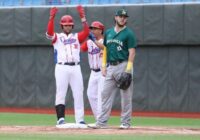
Aside from extra innings, USA matches Cuba (USA Today, AFP)

Cuban activists rely on foreign funding (AP)

Cuba says U.S. climbs to 5th leading trade partner (Reuters)

Cuba current account swings to a surplus in 2007 (Reuters)

Cuban Militant Luis Posada Carriles To Stand Trial In U.S. (LAT) (MH)  
Cuba and the United States. The trade embargo that sometimes bites (The Economist)

Cuba vence a EEUU en el estreno de nuevas reglas de béisbol (NH)

Luis Posada Carriles tendrá que ir a juicio en caso de ciudadanía (NH, AP)

Fito Páez dice que la revolución cubana ya se detuvo (NH)

Cuba retoma la construcción de la Autopista Nacional (NH)

Cuenta corriente de Cuba pasa a superávit en 2007 (Reuters)

Cuba dice EEUU subió a quinto puesto entre socios comerciales (Reuters, EFE)

Níquel y fármacos encabezan las exportaciones (AFP)

Buscaría Chávez someter a la Fuerza Armada Nacional a "modelo cubano" (Notimex)

CUBA: SANTERÍA CELEBRA A FIDEL CASTRO (IPS)

ENTREVISTA-Gloria Estefan regresa a España y sueña con Cuba (Reuters)

Solzhenitsin fugaz en Cuba (NH)

Informaciones tomadas de Encuentro en la Red (http://www.cubaencuentro.com/)

Europa del Este. Un volcán en erupción

Informaciones de Cubanet (http://www.cubanet.org/)

Eliminan talleres

Agradecen ayuda

Las Olimpiadas de los mandarines

El gran ausente

Desengaños

¡Reformistas pa´ Guanabacoa!

El chino es más concreto


--------------

Radio MartÍ: http://www.martinoticias.com/ 

http://www.solidaridadcuba.org/

Micelaneas de Cuba http://www.miscelaneasdecuba.net/

Bitácora Cubana http://www.bitacoracubana.com/

Revista Consenso  http://www.desdecuba.com/

Convivencia  http://www.convivenciacuba.com/

Revista cubana Amanecer http://www.amanecerdecuba.blogspot.com/

Con Cuba: http://www.concuba.org/


UPDATE 2 -Tropical depression may form near Puerto Rico

(Updates with latest weather models)

 NEW YORK, Aug 15 (Reuters) - The tropical wave over Puerto Rico could become a tropical depression any time Friday as the system moves toward Hispaniola, the U.S. National Hurricane Center said in its 8 a.m. EDT (1200 GMT) report.

 The weather models are split on whether the system would reach the oil-rich Gulf of Mexico.

 Most of the models show the system will turn north on the east side of the Florida peninsula and plow through the Bahamas over the next five days. But one model shows the wave entering the Gulf of Mexico after turning north on the west side of Florida sometime next week.

 The NHC could not say where or when a depression might form due in part to "potential interactions with the land mass of Hispaniola."

 It is too soon to say where or whether the system will make landfall in the United States.

 Regardless of development, the NHC warned the system could bring heavy rains and gusty winds to the Virgin Islands, Puerto Rico and Hispaniola on Friday and eastern Cuba, the Turks and Caicos and the southeastern Bahamas on Saturday.

 An Air Force Reserve Reconnaissance plane is scheduled to investigate the system later Friday.

 Energy and commodities markets have been watching the Puerto Rico system and another tropical wave in the Central Atlantic since Aug. 11.

 The Puerto Rico system is more interesting since it might reach the Gulf of Mexico sometime next week.

 The other system, meanwhile, could gradually develop over the next couple of days as it moves west-northwest at 10 to 15 mph, the NHC said. It is located about 750 miles east of the Lesser Antilles and should reach about 400 miles southwest of Bermuda in about five days, according to the weather models.

 If either system strengthens into a tropical storm, with winds of 39 to 73 mph, the NHC will name it Fay.

 Energy traders watch for storms that could enter the Gulf of Mexico and threaten U.S. oil and gas production facilities.

 Commodities traders likewise watch storms that could hit agriculture crops like citrus and cotton in Florida and other states along the Gulf Coast to Texas.  (Reporting by Scott DiSavino; Editing by John Picinich)  

-------------

Aside from extra innings, USA matches Cuba

Enlarge By Matt Detrich, USA TODAY

The ball bounces back toward the pitcher after it deflected off the bat and hit Jayson Nix in the forhead. The injury required stiches and may force the infield to miss some Olympic action.

BEIJING — Team USA's extra-inning discontent and the eye injury to second baseman Jayson Nix aside, the U.S. and Cuba locked horns in a memorable baseball game Friday at the Wukesong baseball complex.

Two games into the seven-game round-robin tournament that it hopes will land them in the medal round, Team USA needed a measuring stick — and it measured evenly against one of the tournament favorites.

Unfortuately for the red, white and blue, Cuba was able to capitalize on a new Olympic extra-inning rule and walk away with a 5-4 victory, sending Team USA to its second one-run loss in three games.

The U.S., which lost its opener on a ninth-inning rally by Korea, then shut out the Netherlands, plays Canada Saturday morning before a scheduled day off.

SCHEDULE: See full tournament, results

"We definitely can't afford any more slip-ups," said center fielder Dexter Fowler.

-------------

Agence France Presse -- English

August 15, 2008 Friday 8:28 AM GMT

Olympics: US accuse Cuba of dirty tricks as batter hospitalised

BYLINE: Jim Slater

Controversy erupted after Cuba's 5-4 victory over political rival United States in Olympic baseball Friday after US manager Davey Johnson accused a Cuban pitcher of trying to injure American batter Jayson Nix who was left with a serious eye injury.

Nix, who hit a home run earlier in the game, was hospitalized after being struck in the left eye when an 11th-inning fastball from Cuban hurler Pedro Luis Lazo struck his bat as he tried to bunt and deflected into his face.

"I'm sure he was throwing at his head," Johnson said. "Jayson fouled it off and it hit him in the eye.

"He's in bad shape. There's a lot of blood, inside and outside of the eye."

Michel Enriquez smacked a two-run double in the 11th inning to give Cuba a 5-3 lead under a new tie-breaker system that allows teams to start wherever they like in their batting order and with runners on first and second base.

The Americans chose to start the bottom of the 11th with Nix at the plate. The second baseman prospect for the Colorado Rockies had been the Most Valuable Player for the Americans at the World Cup tournament in Taiwan last year.

Now his hopes for a Major League Baseball career might be in jeopardy.

Nix shifted position to bunt and Lazo hurled a fastball toward him at head level. Nix managed to get his bat in position to deflect the ball slightly but could not stop it from smashing into his face.

"I'm really not in favor of a guy squaring around to hit the ball and a guy throwing it right at his head," Johnson said. "It's hard to get out of the way of that pitch.

"In my wildest imagination, I didn't think they would throw right at his coconut."

Nix instantly grabbed his face and fell to the dirt face down as US trainers rushed to the scene and players from both teams gathered around, concerned. Nix was helped off the field, holding a towel over his left eye.

"They said it was swelling with a lot of bleeding," Johnson said. "No game of baseball is worth that as far as I'm concerned."

Johnson played down the political rivalry as anything more than facing just another opponent, but was seething over the injury to 25-year-old Nix.

"I respect baseball in Cuba," Johnson said. "I just don't like it played that way and me losing a player. I've lost him probably for the rest of the series."

Johnson objected to hurling so near a batter to defend "the wheel", the situation to start the tie-breaker when a batter tried to hit the ball to the third baseman for a sacrifice out that advances the runners.

"In the format, throwing at guys in that situation to defend the 'wheel', I don't think it's the place for it."

Defending champion Cuba, seeking a fourth Olympic gold medal in five tries, improved to 3-0 while the Americans slid to 1-2 in the eight-team tournament. Four teams will advance from round-robin play into next Friday's semi-finals.

"I would like to see them in the final," Johnson said.

The checkered history between the teams in a sport destined to be deleted from the Olympic lineup after Beijing includes a 2000 meeting when a Cuban player slid into home plate and shoved his spikes into US catcher Pat Borders, sending the former Major League Baseball star to the ground writhing in pain.

js/dj08

------------

Cuban activists rely on foreign funding

By WILL WEISSERT  

Associated Press Writer

14 August 2008

HAVANA (AP) - The money from abroad comes every few months, and after she divides it among fellow dissidents, there's usually only about $100 left for Laura Pollan.

"It goes for things like plastic wrap, toilet paper. There's food to take to the prison, transportation there," said Pollan, who helped start the Ladies in White, a group of political prisoners' relatives.

Cuba's government says foreign funding makes the 60-year-old Pollan a "mercenary counterrevolutionary," an ominous accusation since scores of Cubans have gone to prison for allegedly taking money to undermine the communist system.

Foreign funds for political opposition leaders are a small trickle amid the river of dollars and euros that relatives in the United States send Cubans, and that foreign tourists, largely from Canada and Europe, plow into the island's economy.

But government officials cite those payments to justify authoritarian measures against "dissidents," or Cubans clamoring for political change. That's a broad category in a country where all legal political activity is supposed to be channeled through the Communist Party and its support groups.

Opposition leaders acknowledge getting money from supporters in the United States, Spain and elsewhere. And some American funding comes directly from the U.S. government, whose laws call for ousting Fidel Castro and his younger brother Raul, Cuba's new president.

USAID, which oversees governmental financial support for "democratic transition" in Cuba, budgeted more than $33 million for Cuban civil society this fiscal year. The agency prohibits providing direct cash payments to activists in Cuba, but distributes funds to U.S. academic institutions and think tanks studying the island, as well as nonprofit groups that send books and humanitarian aid to Cuban dissidents and relatives of political prisoners.

But little of that money actually makes it here. A March study released by the influential Cuban American National Foundation focused on federal grants to promote democracy in Cuba between 1998 and 2006, and found that just 17 percent of that funding went to on-island assistance. The rest was used for overhead, political study, or to sponsor activities in the U.S., the foundation found.

Foreign Minister Felipe Perez Roque says "the issue is not the money -- which is a lot for Cuba -- but its origin."

"Getting blood money," he said. "Everywhere in the world that's called being a mercenary."

But Pollan counters that foreign money is necessary for survival.

"We have to subsist. Most of us don't work. Our husbands are imprisoned and jobs are closed to our (adult) children," said Pollan, who taught high school but quit under pressure for criticizing the government.

Cuban officials recently dedicated a week of television programs to a case they consider especially alarming: accusations the former top U.S. diplomat in Havana, Michael Parmly, carried cash to dissidents donated by a private group headed by a man once convicted in the U.S. of conspiring to collect weapons to overthrow Cuba's government.

Parmly refused to comment on the charges and left Cuba in July, after finishing his diplomatic assignment.

"It's a very serious incident," said Francis Boyle, an international law professor at University of Illinois, who suggested the U.S. may have violated the Vienna Convention on Diplomatic relations.

"Suppose al-Qaida were to try and send money to some dissident group here by means of some embassy in the United States," Boyle said.

Pollan concedes getting $2,400 from the group, but says it was a one-time payment split among 18 members of the Ladies in White.

Dissidents say turning against the government is like bad-mouthing the boss in a company town: State interests account for more than 90 percent of the economy, and salaries are worth less than $20 per month on average and barely enough to live on.

Dissidents' phones are bugged, their houses are watched and filmed and their tiny organizations infiltrated by undercover intelligence agents who tip off prearranged, pro-government mobs to any planned street demonstrations. Activists also can lose their jobs or get shunted into undesirable positions.

Nearly all Cubans -- dissidents included -- have free housing, health care and education through college. Rations of rice, potatoes, soap and other basics get people through part of each month.

But other necessities -- such as extra cooking oil and toilet paper -- usually require some access to foreign currency -- sometimes from tourists, sometimes from relatives, sometimes even from goods stolen at state workplaces and sold on the black market.

Dissident Oswaldo Paya said activists struggle to make ends meet like all other Cubans, but "a lot of eyes" watch dissidents and say, "Ah ha! you're getting money!"

"No one dares say to the government leaders, 'Let's see what houses you live in. Let's see how many cars you have,'" said Paya, awarded the European Union's Sakharov human rights prize in 2002.

Paya, 56, is a medical engineer who bikes to work. He says government agents lean on his superiors to ensure he works odd hours, and force colleagues to spy on him, hoping he will quit. He earns about $24 per month and while he says he shuns support from Cuban American exile organizations, he would not answer questions about receiving funding from other foreign sources.

"It's dangerous. We pay for it by being watched, by being excluded. My house has been robbed ... mobs have threatened my family," he said. "But it's the price we have to pay. We hope that, one day, all Cubans will simply be able to say what they think freely, without glancing over their shoulders."

------------

Cuba says U.S. climbs to 5th leading trade partner

HAVANA, Aug 14 (Reuters) - The United States ranked among communist Cuba's top five trading partners for the first time in 2007 despite the decades-old U.S. trade embargo, as U.S. agriculture sales increased by $100 million.

Trade data for 2007 posted on the Web site of Cuba's National Statistics Office (www.one.cu) placed the United States fifth at $582 million, compared with $484 million in 2006, including shipping costs.

The United States, which began selling food to Cuba in 2002 under an amendment to the embargo, placed seventh in 2006 and 2005.

Revolutionary ally Venezuela and communist China were Cuba's top trading partners at $2.698 billion and $2.457 billion respectively, with Canada placing third and Spain fourth, each at more than $1 billion.

Before the 1959 Cuban revolution that swept Fidel Castro into power, the United States was Cuba's top trading partner by far. In 1962, the United States imposed a trade embargo still in place today.

Cuba's total trade in 2007 was $13.8 billion, with exports of $3.7 billion and imports of $10 billion.

The U.S. food trade is expected to grow this year due to high prices for Cuban imports such as corn, wheat, soy and chicken.

"The economic logic of U.S.-Cuba trade is so powerful that it trumps political hostilities," said Dan Erikson, a Caribbean expert at the Inter-American Dialogue policy group in Washington.

"If the embargo were lifted then a flood of trade and investment would pour into Cuba, transforming both the economies of Cuba and South Florida in the process," Erikson said.

The Cuban government and embargo foes in the U.S. Congress argue that lifting the trade embargo entirely would result in the United States grabbing a much larger share of Cuba's trade and increasing its influence in Havana.

But the Bush administration and Cuban American representatives in Congress argue trade would prop up the Castro government and that profit should not come before freedom.

(For the statistical office's tables on trade, please go to: http://www.one.cu/aec2007/datos/8.3.xls; for more official data on Cuba's economic performance in 2007, please go to: http://www.one.cu/aec2007/esp/20080610index.html) (Editing by Jeff Franks, Tom Brown and bill Trott)

--------------

Cuba current account swings to a surplus in 2007

By Marc Frank  

HAVANA, Aug 14 (Reuters) - Cuba's broadest gauge of its foreign trade swung to a $488 million surplus in 2007, helped by a surge in service exports which have traditionally included health care provided in Venezuela, official statistics showed on Thursday.

The current account balance of payments moved to a surplus in 2007 from a $215 million deficit in 2006, as net service exports last year reached $7.8 billion, helping offset a trade deficit of about $6.2 billion, as gauged by current prices, according to data on National Statistics Office's Web site.

The current account, the broadest measure of any country's external transactions, can play a key role in augmenting or diminishing a country's foreign currency reserves.

Cuba does not specify what it includes within the service export category, though on various occasions officials have said tourism and related revenues, the export of medical and other technical services and donations all fall within it.

Besides trade in goods and services, like tourism, the current account also includes financial transfers like profit repatriation and interest payments.

The statistical office's data Thursday only provided data on current account's tally of trade in goods and services.

Last year, Cuba's exports of goods totaled about $4 billion compared with $3.2 billion in 2006, as tallied by current prices. Total imports of goods reached $10.2 billion compared with $9.5 billion in 2006.

Analysts say strengthening prices of nickel, Cuba's leading export, have helped boost overall exports.

Service exports were about $8 billion in 2007 at current prices, compared with about $6.7 billion in 2006. Service imports were $215 million in 2007 compared with $211 million in 2006.

VENEZUELA TO THE RESCUE?

Government sources and local analysts say that in recent years net service income has been mainly due to offering services like health care to leftist ally Venezuela.

That as enabled Cuba to more or less balance its external finances despite a huge trade deficit, begin paying debts contracted since 1991 and register strong growth after years of crisis that followed the demise of the Soviet Union.

Non-tourism related service exports began their dramatic increase after a 2004 accord with Venezuela, under which the oil-rich South American country pays for massive health and other assistance.

In that year, service exports were just under $4 billion, of which more than half were from tourism and related activities, at current prices. Imports were $5.5 billion and income from non-tourism services, such as sending doctors overseas, of around $1.5 billion.

The National Statistics Office has separately reported the 20 percent jump in service exports in 2007 was not related to tourism revenues, which stagnated at $2.2 billion.

Revenues from pharmaceutical and other joint ventures abroad may also be included, according to local economists, as well as the training of foreign students.

For the statistical office's table on the current account, please go to:

http://www.one.cu/aec2007/datos/5.16.xls

For more official data on Cuba's economic performance in 2007, please go to: http://www.one.cu/aec2007/datos/5.1.xls (Editing by Walker Simon)

------------

Cuban Militant Luis Posada Carriles To Stand Trial In U.S. (Williams, LAT)  
Friday, August 15, 2008
Los Angeles Times
By Carol J. Williams
A federal appeals court ruled Thursday that Cuban militant Luis Posada Carriles should stand trial for an alleged immigration violation in the United States. The decision is likely to inflame Cuba and Venezuela, which want to prosecute him for terrorism in the 1976 bombing of a Cuban jetliner.
The decision by a three-judge panel of the U.S. 5th Circuit Court of Appeals in New Orleans was expected to take the pressure off the Bush administration to respond to Venezuela's demands that Posada, who lives in Miami, be extradited to face trial for the bombing. The plane, en route from Venezuela to Havana, exploded in flight shortly after making a stop in Barbados. All 73 people aboard were killed.
At the time, Posada lived in Caracas, Venezuela's capital, and held joint Cuban and Venezuelan citizenship. Venezuela was a U.S. ally.
Posada, 80, worked for the CIA during the Cold War and has been tied to covert "black operations" in Latin America. His Miami lawyer has intimated that the man considered a freedom fighter by many fellow Cuban exiles could reveal information embarrassing to the government, including former President George H.W. Bush, who was director of central intelligence during part of Posada's CIA service.
Posada's communications with the spy agency -- disclosed in declassified documents obtained by the National Security Archive at George Washington University -- show that he told his handlers in Washington of plans to "hit" a Cuban airliner days before the Oct. 6, 1976, explosion. The incident is considered to be the first case of air terrorism in the Americas.
Venezuela had tried Posada for the bombing in the 1980s, but he was acquitted on a technicality. The government kept him in a Caracas jail pending retrial, but he escaped in 1985.
Panama convicted Posada of conspiracy in a 2000 attempt to assassinate Fidel Castro. But in 2004, the outgoing Panamanian president pardoned him and three other Cuban exiles from Miami in what was perceived as a favor to President Bush in an election year.
Posada made his way to the U.S. and was arrested in May 2005 for illegal entry. Venezuela demanded that the notorious anti-communist be extradited for retrial in the bombing.
Instead, in January 2007, a federal grand jury in West Texas indicted Posada on immigration fraud charges.
That immigration case was thrown out last year by U.S. District Judge Kathleen Cardone in El Paso on grounds of government misconduct. Thursday's appeals court panel rejected Cardone's ruling and ordered the case to trial.
Shortly after Posada's 2005 arrest, a U.S. immigration judge ruled that he could not be sent to Venezuela or Cuba because he could face torture there. The State Department sought to deport him elsewhere, but at least seven friendly nations have declined to take in the renowned militant.

-------------

FEDERAL COURTS

Indictment against Posada reinstated

An appeals court has reversed the dismissal of charges against Cuban exile militant Luis Posada Carriles, who is accused of lying about his entry into the United States.

Posted on Fri, Aug. 15, 2008reprint print email

BY ALFONSO CHARDY

achardy@MiamiHerald.com

A federal appeals court in New Orleans on Thursday reinstated an indictment against Luis Posada Carriles that charged the Cuban exile militant with lying about how he sneaked into the United States in 2005.

On May 8, 2007, an El Paso federal judge dismissed the grand jury indictment after finding that investigators had ''engaged in deceptive conduct and outrageous tactics'' during proceedings. U.S. District Judge Kathleen Cardone accused the government of committing ''fraud, deceit and trickery'' to indict Posada and freed him from further prosecution in the case.

Posada returned a free man to Miami and has been living at an undisclosed location since then.

On Thursday, Posada's lawyer said his client would not comment but noted that he was ''obviously disappointed like we all are.'' Arturo Hernandez said he planned to ask the appeals court for a rehearing, and that if it is denied, he may appeal to the Supreme Court.

''Those decisions will be made in due course,'' Hernandez told The Miami Herald after the appeals court issued its ruling. ``For now, they are reinstating the case.''

Hernandez said he did not expect federal authorities to rearrest Posada pending all possible new motions.

Dean Boyd, a Justice Department spokesman, would not say what federal authorities plan to do. He issued a written statement saying: ``We're pleased with the ruling and will proceed forward as appropriate.''

Posada, 80, surfaced in Miami in March 2005 after leaving his temporary home in Honduras.

Posada has been sought by the Venezuelan and Cuban governments in connection with allegations he played a role in the bombing of a Cuban jetliner in 1976 that killed 73 people and bombings of Cuban tourist sites in 1997.

Posada has denied he took part in the plane bombing. Initially, Posada was quoted in a New York Times interview as taking credit for the Cuban tourist-site bombings, but he later told an immigration court that he misspoke because his English was poor.

Before he was detained by immigration agents in Miami-Dade in May 2005, Posada told The Miami Herald he had entered the United States with the assistance of a migrant smuggler through the Mexican border at the Matamoros-Brownsville area.

He repeated the same story during interrogations by immigration officials while in detention at an immigrant detention center in El Paso and in interviews for a citizenship application he had filed.

On Jan. 11, 2007, the federal grand jury in El Paso handed up a seven-count indictment charging Posada with making false statements in the application.

The government planned to show at trial that Posada was smuggled from Mexico to Miami aboard a shrimping vessel named Santrina that was manned by several Cuban exiles including Santiago Alvarez, Posada's chief South Florida benefactor. One exile aboard was an FBI informant who would have testified that he saw Posada on the boat as it picked him up in Isla Mujeres, near Cancún, and transported him directly to Miami.

During pretrial maneuvering, Judge Cardone became exasperated with how federal investigators gathered evidence against Posada, accusing them of misusing naturalization proceedings to implicate the exile militant in a criminal case. She also noted that the interpreter in the case had consistently mistranslated questions to Posada and Posada's answers to immigration officials.

''This is not an acceptable practice in interpretation, and it caused severe confusion during the interview,'' Cardone wrote in her ruling, suppressing Posada's statements in the interview and throwing out the indictment.

Federal prosecutors appealed the ruling to the Fifth Circuit Court of Appeals in New Orleans, which has jurisdiction for Texas cases. ''We reverse the dismissal of the indictment, reverse the suppression of the statements made at the naturalization interview, and remand the case for further proceedings,'' the court said in its opinion.

The judges found that despite errors and confusion in translation, neither the interpreter nor Posada misunderstood the key question that led government investigators to conclude that he had lied about how he entered the United States.

For example, the appeals court said, the interpreter properly relayed the key question: ``And when you came to the United States in March 17th or 18th, where did you enter? The court added that Posada clearly understood the question because he answered: ``Matamoros.''

-------------

The Economist

August 16, 2008 

U.S. Edition

Patchy blockade;

Cuba and the United States

SECTION: THE AMERICAS

DATELINE: Havana

HIGHLIGHT:      Cuba and the United States   

The trade embargo that sometimes bites

FOR almost half a century, the United States has imposed a trade embargo against Cuba. And yet it sometimes seems barely visible. Across the island, American brands are ubiquitous. Tourists can order a Coca Cola (made in Mexico) in state-run hotels. Computers running Microsoft software have appeared in the capital?s few electronics stores. A fleet of Ford tankers refuel aeroplanes at Havana?s airport. Taking advantage of an exemption introduced in 2000, American farmers have become Cuba?s biggest source of food imports, a cash trade worth $600m a year. No wonder that some Cubans wonder whether the "blockade" which the government blames for nearly all of Cuba?s problems might be some sort of Orwellian trick. "Does it really exist?" asks a medical student in Havana. "I don?t know what to believe anymore."

 But plenty of companies that deal with Cuba have recently been reminded that the embargo is real. Last month, the United States? Treasury?s Office of Foreign Asset Control, which is responsible for enforcing it, fined Minxia, a Maryland-based subsidiary of China?s MinMetals Corporation, $1.2m for dealing in Cuban metals. Gate Gourmet, a Swiss-American group, was ordered to pay $600,000 because it supplies in-flight meals to Cuba?s national airline.

Although the embargo has manifestly failed in its objective of removing Fidel Castro?s communist regime, in 1996 it was tightened by the Cuban Liberty and Democratic Solidarity Act (better known, after the legislators who sponsored it, as Helms-Burton). This attempts to apply the embargo to foreign companies and individuals. Its extraterritorial pretension riles even many of America?s closest allies. It has notably been invoked to ban the directors of Sherritt, a Canadian firm which runs Cuba?s nickel mines, from entering the United States. (They included a former editor of The Economist). But in deference to those allies, the Act?s draconian Title III, which gives Americans who owned property in Cuba before the revolution the right to sue foreigners who now invest there, has been waived every six months, first by Bill Clinton and then by George Bush.

A tightening of America?s bank regulation after the terrorist attacks of 2001 has become a bigger impediment to those wanting to do business in Cuba. The United States considers Cuba, along with Iran, North Korea, Sudan and Syria, to be a "state sponsor of terrorism" (though without any recent plausible evidence). Whatever they might think of the Cuban embargo, banks around the world do not want to run afoul of antiterrorism laws.

In 2004 UBS, a Swiss bank, paid a $100m fine (without admitting any liability) for providing new banknotes to Cuba and Iran. In 2007 ING of the Netherlands, which once boasted that it was the first big bank to open an office in Cuba, abruptly closed there. This year, directors at the company which has exclusive rights to import Cuban cigars to Britain, were surprised to receive a letter from Lloyds TSB, their long-time bankers, suggesting that they take their business elsewhere.

Despite all the restrictions, plenty of international companies continue to operate in Cuba. InBev, a Belgian-Brazilian brewer that recently bought America?s biggest beer maker, Anheuser-Busch, for $52 billion, has a joint-venture with Cuba?s government which claims 40% of the island?s beer market. As a director of a European company with a big investment on the island puts it, the best strategy is to "try to stay under the radar and make damned sure you are here when the United States? government finally sees sense."

-----------

Publicado el viernes 15 de agosto del 2008

 Cuba vence a EEUU en el estreno de nuevas reglas de béisbol

JORGE EBRO / EL NUEVO HERALD

PEKIN

Pedro Luis Lazo recibe el saludo del receptor Eriel Sánchez al finalizar el choque.El equipo cubano fue el que más protestó por las nuevas reglas para acortar el tiempo de los juegos de béisbol en los Juegos Olímpicos de Pekin, pero resultó el primer beneficiado por ellas.

Un hit de Michel Enríquez en la 11na entrada remolcó dos carreras que rompieron un empate a tres y le dieron a la Isla su segundo triunfo 5-4 ante el conjunto de Estados Unidos.

"No somos grandes simpatizantes de esta nueva regla, pero nos tocó ganar'', manifestó el mánager antillano, Antonio Pacheco. "A lo mejor mañana le toca a otro. Aquí la ley es pareja para todo el mundo''.

Para acortar la duración del choque, el congresillo técnico del evento había reafirmado que a partir del 11no capítulo el equipo al bate pondría corredores en primera y segunda, y comenzaría la alineación con el hombre de su preferencia.

Con el choque 3-3 y sin decisión, Pacheco coloco en circulación a Héctor Olivera y a Luis Navas, y llamó al bate a su primer hombre, Giorbis Duvergel, quien tocó la bola y adelantó los carredores antes de que Enriquez conectara un metrallazo sobre un envío de Jeff Stevens.

Ambos mánagers pasaron varios minutos repasando la regla con los árbitros, pues era la primera vez que se ponía en efecto.

El dirigente de Estados Unidos, Davey Johnson, sí se había manifestado a favor de esta medida, pero las cosas le salieron mal, al punto que llegó a acusar al lanzador cubano, Pedro Luis Lazo, de tirarle un lanzamiento a la cabeza a uno de sus peloteros.

"No es que me arrepiente ahora de la medida, pero no es la mejor manera de terminar un juego'', expresó Johnson sobre el supuesto envío a Jason Nix, quien tuvo que salir del choque. "Siempre he abogado por el juego duro, pero esto no es lo correcto. Posiblemente he perdido a uno de mis mejores hombres para el resto del torneo''.

Después de que Cuba se fuera adelante, llegó el turno para que Estados Unidos estrenara la regla y con dos a bordo, vino a batear Nix, quien le había sacado la bola del parque a Lazo en el octavo.

El pinareño utilizó un lanzamiento pegado sobre el que Nix quiso tocar bola para mover a los corredores, pero la bola dio en el bate y rebotó con fuerza en su rostro al punto de enviarlo al suelo manando sangre en la región cercana al ojo. Tuvo que ser llevado de urgencia a un hospital.

Esto provocó la ira de Johnson.

"No sé quién cree que soy yo'', ripostó Lazo. "Yo no acostumbro a eso. Todo el que me conoce desde siempre sabe que no soy de esos lanzadores revanchistas. El trató de tocar y la salio mal. Punto''.

Pacheco también salió en defensa de su lanzador.

"Lazo no necesita del juego sucio para imponerse'', agregó. "Nuestro béisbol es limpio''.

Aunque Enríquez fue el héroe ofensivo del choque al impulsar tres de las cinco carreras de los cubanos, Lazo volvió a ser el caballo de batalla de su equipo al caminar seis entradas, un día después de haber trabajado tres.

"Me siento desbaratado'', bromeó el pinareño. "Hacía como 10 años que no trabajaba tanto para el equipo Cuba en tan poco tiempo. Afortunadamente el brazo me responde y me siento entero. Este es un torneo corto y estaré listo para lo que sea''.

Cuba marcó en el mismo primer inning ante Trevor Cahill, quien llenó las bases y soportó hit impulsor de Enríquez y luego dio pelotazo a Alexei Bell con las bases llenas, pero luego se compuso en el box.

Los norteños empataron en el cuarto con tres dobles consecutivos frente al abridor Luis Rodríguez, pero Cuba tomó la delantera en el octavo por cuadrangular de Alfredo Despaigne antes de que Nix igualará 3-3 con su jonrón en la parte baja de la entrada.

"Nunca antes había jugado un choque así y creo que nunca más lo haré'', comentó al final el segunda base Terry Tiffee, sobre la nueva regla. "Creo que resultó un gran choque. Todo el mundo se entregó al máximo''.

-----------

Publicado el viernes 15 de agosto del 2008reimpresiones imprimir Enviar por e-mail Digg it

 Luis Posada Carriles tendrá que ir a juicio en caso de ciudadanía

WILFREDO CANCIO ISLA

El Nuevo Herald

Luis Posada CarrilesEl militante anticastrista Luis Posada Carriles tendrá que someterse a un proceso judicial por las acusaciones de haber mentido a las autoridades estadounidenses durante el procesamiento de su ciudadanía, anunció este jueves un tribunal de apelaciones en Nueva Orleans.

Un panel de tres jueces del Tribunal del Quinto Circuito de Apelaciones revirtió un fallo anterior que exoneró a Posada de ser juzgado bajo siete cargos de fraude migratorio y falso testimonio, y ordenó proceder con el juicio inicialmente fijado ante un tribunal federal de El Paso, Texas.

La decisión del panel judicial de Nueva Orleans da marcha atrás al histórico veredicto de 64 páginas de la jueza federal Kathleen Cardone, quien el 8 de mayo del 2007 canceló el encausamiento de Posada por considerar "escandalosas'' y "ofensivas'' las tácticas del gobierno. La acusación se basó en las declaraciones presuntamente fraudulentas que el procesado hizo a las autoridades de Inmigración durante la entrevista de naturalización.

En un documento de 35 páginas divulgado en la tarde del jueves, los jueces Carolyn Dineen King, Patrick Higginbotham y Leslie H. Southwick consideraron que Cardone erró al determinar que los errores de traducción en el proceso de ciudadanía invalidaban la acusación del gobierno y anulaban la totalidad de los cargos.

El Departamento de Justicia había apelado la decisión en noviembre del 2007 y el Tribunal del Quinto Circuito celebró una audiencia especial para ventilar el caso el pasado 4 de junio. Con anterioridad el Tribunal de Nueva Orleans había fallado a favor de Posada, cuando el Departamento de Justicia trató de impedir su libertad bajo fianza en abril del 2007.

Los abogados de Posada reaccionaron el jueves con decepción y dijeron que analizarán las opciones legales para proceder en lo adelante.

"Posada ya conoce de la decisión y se encuentra muy disgustado'', declaró Arturo Hernández, abogado principal de la defensa. "Estamos analizando el documento para decidir si llevamos el caso ante el pleno de jueces del tribunal de Nueva Orleans o acudimos a la Corte Suprema de la nación''.

La alternativa de someter a reconsideración el fallo del panel de tres jueces implica una solicitud a los 12 integrantes del Tribunal del Quinto Circuito de Apelaciones para que se evalúen y se pronuncien sobre todos los pormenores del caso. Si el plenario de jueces ratifica el veredicto del panel, la única opción es el Tribunal Supremo, que no tiene necesariamente que aceptar el caso.

Hernández dijo que no cree que las autoridades procedan a arrestar a su cliente, que permanece en libertad bajo fianza en Miami desde el 19 de abril del 2007.

El Departamento de Justicia declinó referirse a las posibles acciones legales en el caso y se limitó a saludar el veredicto de Nueva Orleans en un escueto comunicado.

"Estamos satisfechos con la decisión y procederemos en lo adelante del modo más apropiado'', señaló Dean Boyd, portavoz del Departamento de Justicia en Washington.

Hasta el cierre de esta edición, el gobierno cubano no se había pronunciado sobre la orden de reanudar el procesamiento judicial contra Posada, a quien La Habana acusa de "terrorista internacional'' protegido por la comunidad exiliada de Miami.

Posada, de 80 años, se encuentra en Miami con una orden final de deportación. Sobre él pesa además una solicitud de extradición del gobierno de Venezuela, que busca juzgarlo como máximo responsable de la voladura de un avión cubano con 73 pasajeros en 1976.

Un jurado de instrucción en Nueva Jersey también lo investiga por su presunta participación en atentados dinamiteros contra instalaciones turísticas cubanas en 1997. Para complicar su situación, el pasado julio la Corte Suprema de Panamá dejó sin efecto el indulto que le había otorgado la presidenta Mireya Noscoso en septiembre del 2004. Posada y otros tres activistas anticastristas fueron condenados por un tribunal panameño a ocho años de cárcel en el 2003, bajo cargos de posesión ilegal de explosivos, falsificación de documentos y delitos contra la seguridad colectiva.

El gobierno de Panamá dijo esta semana que iniciará los trámites de extradición de Posada tan pronto la fiscalía emita la solicitud y sea presentada ante la cancillería istmeña.

wcancio@elnuevoherald.com

-----

Ordenan que Posada Carriles sea enjuiciado

Por ALICIA A. CALDWELL  

14 August 2008

EL PASO, Texas, EE.UU. (AP) - Una corte federal de apelaciones ordenó que el anticastrista Luis Posada Carriles sea enjuiciado en El Paso bajo cargos de fraude migratorio.

Un panel de tres jueces de la Corte de Apelaciones del Quinto Circuito en Nueva Orleáns falló el jueves que Posada sea sometido a juicio, bajo cargos de que le mintió a las autoridades federales en su intento por convertirse en ciudadano estadounidense.

El caso penal contra Posada, de 80 años, fue sobreseído el año pasado cuando la juez federal de distrito Kathleen Cardone falló que el gobierno cometió engaños al emplear una entrevista de naturalización con el fin de acumular argumentos contra el anticastrista.

Felipe Millán, uno de los abogados de Posada en El Paso, dijo que el equipo legal de su cliente está revisando la extensa decisión.

"Estamos analizando la opinión para determinar qué vamos a hacer", dijo Millán el jueves a The Associated Press. "Tomaremos una decisión... una vez que tengamos una oportunidad de revisar" el fallo.

En un comunicado enviado por correo electrónico a The Associated Press, Dean Boyd, portavoz del Departamento de Justicia, dijo: "Estamos complacidos con el fallo y seguiremos adelante como corresponda".

Posada es un venezolano nacido en Cuba buscado en el país de Sudamérica bajo cargos de que orquestó un atentado en 1976 contra un avión comercial cubano. Actualmente aguarda su deportación.

Fue arrestado por primera vez en mayo del 2005 por una violación civil a las leyes de inmigración después de que se introdujo furtivamente al país desde México aproximadamente dos meses antes. Posada, ex operativo de la CIA y oficial del ejército de Estados Unidos, ha argumentado que un contrabandista lo trajo a Texas por tierra, pero las autoridades federales alegan que en realidad viajó por mar desde México hasta la Florida.

Posada fue puesto en libertad en abril del 2007 y ha estado viviendo en Miami con su familia. Un juez de inmigración ha fallado que no puede ser enviado a Venezuela ni a Cuba debido a los temores de que sea torturado. Ningún otro país ha estado dispuesto a recibirlo.

En enero del 2007, un jurado investigador federal lo acusó formalmente en el caso de fraude migratorio después de que los fiscales argumentaron que mintió sobre la forma en que entró a Estados Unidos en el 2005 y sobre otros hechos de su pasado.

En un fallo de 38 páginas emitido justo antes de su juicio programado para mayo del 2007, Cardone dijo que una transcripción de la entrevista de naturalización de Posada era imprecisa, omitía elementos clave que se trataron allí y parecía haber sido transcrita por varias personas con distintos niveles de capacidad. También dijo que un traductor al español proporcionado por el gobierno era incompetente.

"Además de cometer fraude y engaño, esta corte encuentra que las tácticas del gobierno en este caso son tan enormemente impactantes e indignantes como para violar el sentido universal de la justicia", escribió Cardone.

También concluyó que el gobierno se valió de la entrevista de naturalización como un pretexto para acumular cargos penales contra Posada.

Sin embargo, los jueces de apelación concluyeron en un fallo de 35 páginas que "la conducta del gobierno identificada por la corte de distrito como la base para sobreseer la acusación formal simplemente no es relevante a estas presuntas ofensas".

La corte también falló que, como Posada fue quien inició el procedimiento de naturalización, el gobierno estaba obligado a proporcionar una entrevista y una investigación.

"Nos sorprende como muy incongruente, por decir lo menos, que estos procedimientos sean caracterizados como una farsa orquestada por el gobierno", falló la corte.

El tribunal también concluyó que una revisión de la entrevista de Posada y de documentos en el caso parecían mostrar que la entrevista de naturalización se realizó en forma adecuada y legal.

"Abundando más, nada en el registro sugiere que la entrevista de naturalización haya sido otra cosa que un examen de buena fe efectuado de acuerdo con las normas aplicables", afirmaron los jueces.

Aún no se establece una nueva fecha de la corte en El Paso.

-----------

Fito Páez dice que la revolución cubana ya se detuvo

ARTURO ARIAS-POLO

El Nuevo Herald

El afamado cantautor argentino Fito Páez criticó el jueves en Miami la permanencia en el poder de la élite gobernante en Cuba y exhortó a todos los cubanos a fundar la esperanza de un nuevo país.

"Nadie puede calentar la silla más de 40 años. Cualquier proceso revolucionario conlleva la idea revolucionaria: si se queda fijo es que ya se paró'', expresó Páez al referirse a la situación cubana durante una rueda de prensa en el Centro de Artes Escénicas Adrienne Arsht.

El artista rememoró la época de pasión que vivió años atrás cuando llegó por primera vez a la isla.

"No soy un politólogo, pero puedo decir que [la primera vez] llegué a La Habana muy joven con una extrema ingenuidad [en 1987]. Me apasioné muchísimo con todo eso porque eran valores ligados a mi historia personal en Argentina'', relató.

Con su elocuencia habitual, el músico de 45 años esquivó dar detalles sobre su vida personal y se enfrascó en una disertación sobre los cambios en la industria del disco, junto a la promoción de su más reciente producción, Grandes canciones (Sony-BMG).

La ocasión sirvió para anunciar el concierto que ofrecerá en la sala de Biscayne el próximo 19 de septiembre.

Sin embargo, Páez no rehuyó expresar sus criterios sobre el tema cubano.