Cuban News August 19 2008. Visit our web site at: (http://havana.usinterestsection.gov/)

You may leave the list at any time by sending an e-mail with the message "SIGNOFF USINTHAVANANEWS-CB" (without the quotes) to LISTSERV@LISTS.STATE.GOV.

Archivos: http://statelists.state.gov/scripts/wa.exe?A0=USINTHAVANANEWS-CB


Cuban Dissident Quits Support Group For Prisoners (AP)   

Japan Stops New Insurance on Trade with Cuba (Jiji Press)

South Korea tops Cuba 7-4 (AP)

Cuba reaps goodwill from doctor diplomacy (M. OJITO, MH)

DEFECTIONS. Cuban doctors build new lives in Florida (MH)

A Revolution To Repair: New Friends Come To The Aid Of Raúl's Cuba (Lapper, FT)   

Ore. candidate defends trip to Cuba (AP)

Líder de las Damas de Blanco abandona el movimiento(NH, IPS)

Asegurador japonés suspende por impagos las coberturas para exportaciones a Cuba (CE, EFE)

España ofrece ayuda humanitaria a Cuba(NH/EFE)

Fay abandonó Cuba sin causar víctimas(NH/EFE)

A qué espera Raúl Castro (La Vanguardia)

Irán y Cuba: Alianza de intereses (Diario Las Americas)

JORGE SALAZAR-CARRILLO: Es como si no hubiera sido(NH)

MANUEL VAZQUEZ PORTAL: Papel crepé sobre las cicatrices(NH)

RAFAEL ROJAS: Las dos traiciones del general Cantillo(NH)

El modelo vietnamita (El País)

JORGE FERRER: Castrismo 2.0(NH)

ROBERTO CASIN: La jirafa sí tiene pasaporte(NH)

ARIEL HIDALGO: Castillos en el aire(NH)

La pelota cubana sufre su primer fracaso en Pekín(AP, NH)

Más de Deporte…

Informaciones tomadas de Encuentro en la Red (http://www.cubaencuentro.com/)

Regalos inmerecidos(EER)

¿Otra vez Moscú?(EER)

Informaciones de Cubanet (http://www.cubanet.org/)

19 de agosto 2008

18 de agosto 2008

--------------

Radio MartÍ: http://www.martinoticias.com/ 

http://www.solidaridadcuba.org/

Micelaneas de Cuba http://www.miscelaneasdecuba.net/

Bitácora Cubana http://www.bitacoracubana.com/

Revista Consenso  http://www.desdecuba.com/

Convivencia  http://www.convivenciacuba.com/

Revista cubana Amanecer http://www.amanecerdecuba.blogspot.com/

Con Cuba: http://www.concuba.org/


Cuban Dissident Quits Support Group For Prisoners (Weissert, AP)  

Tuesday, August 19, 2008

AP

By Will Weissert

A top Cuban dissident on Monday abruptly left an activist support group she helped found for mothers and wives of Cuban political prisoners, saying she would rather focus on her work as a journalist.

Miriam Leiva said she will continue to support the "Ladies In White" but will no longer participate in the group or its decision-making processes, or speak on its behalf.

The announcement came amid rumors of a split within the organization between Leiva and fellow moderate Ladies in White members, and other members who have called on the group to step up public protests and more openly oppose the communist government.

Leiva skipped an April sit-down protest when other Ladies in White slipped into Revolution Plaza near where President Raul Castro has an office. Police broke up that peaceful demonstration.

Leiva's cramped apartment in Havana's Playa district was deserted Monday and she could not be reached for comment. But in a statement, she wrote, "I will not continue active, customary participation in the Ladies in White movement and for that reason I will not be bound to its declarations and pronouncements."

She said she will "continue considering myself one of the founding members of the Ladies in White with pride and I wish it success in its human and peaceful pursuits." Cuba's government controls all official news media, but Leiva has worked as an "independent" journalist since 1996, and said she will spend more time writing.

Leiva's husband, Oscar Chepe, is a dissident economist who was among 75 activists rounded up in 2003, accused of working with U.S. authorities to undermine the government and sentenced to lengthy prison terms. He was later freed on medical parole, however, and 19 other dissidents have been released conditionally or freed into forced exile in Spain in the past five years.

Leiva's statement surprised members of the Ladies In White. Clara Lourdes Prieto, sister of Fabio Prieto, who is serving a 20-year prison sentence for his political activities, said Monday she had expected Leiva might leave the group, but did not think she would announce her intentions so publicly.

"If that was her decision, we respect it," Prieto said. When asked about the group's leadership, she replied, "We don't have any boss."

Since its founding following the crackdown on opposition leaders, the group has expanded to include all female relatives of political prisoners. Wearing all-white clothing and carrying flowers, the women hold a weekly, peaceful march down Havana's busy Fifth Avenue, demanding freedom for their jailed loved ones.

-----------

Japan Stops New Insurance on Trade with Cuba

19 August 2008

Jiji Press English News Service

Tokyo, Aug. 19 (Jiji Press)--Nippon Export and Investment Insurance (NEXI) has stopped accepting new applications for insurance covering trade with Cuba, according to informed sources.

The suspension resulted from Cuba's failure to pay for Japanese export deals, for which payments were ensured by letters of credit issued by the National Bank of Cuba, the sources said.

Cuba is seen struggling with its deteriorating cash position due to soaring food and crude oil prices coupled with falling prices of nickel, a key source of foreign currency acquisition for the Caribbean country.

It is not certain whether Cuba has also failed to pay for exports by companies in other countries.

Officials of the National Bank of Cuba and the Central Bank of Cuba visited NEXI on Aug. 11 to explain the situation, the sources said. The officials told the Japanese independent administrative body that Cuba is short of settlement funds, the sources said.

NEXI on Friday recognized that it will take over payments for exports to Cuba by some Japanese companies, including Meiwa Corp. , based on their trade insurance policies. The body is to cover a total of nearly 20 billion yen.

-----------

Associated Press Worldstream

August 19, 2008 Tuesday 8:24 AM GMT

South Korea tops Cuba 7-4

BYLINE: By JANIE McCAULEY, AP Sports Writer

DATELINE: BEIJING

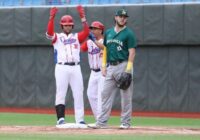
Ko Young-min's two-run single in the fourth tied the game and Cuba also committed a costly two-run error that inning as South Korea rallied past the defending champion Cubans 7-4 on Tuesday in a matchup of Olympic baseball's unbeaten teams.

Ko also scored an insurance run on Lee Yong-kyu's RBI single in the sixth.

The teams will finish first and second the order still to be determined after the seven-game preliminary tournament is completed Wednesday night, moving into Friday's semifinals. South Korea is 6-0 and the only remaining undefeated club with one game left.

"This is unexpected and we are very fortunate," South Korea manager Kim Kyung-moon said. "Since we beat the U.S. in our opener, the good luck has stayed with us so far. I'm very satisfied with my players, their cooperation and the results."

Either way, South Korea will have a tough rematch with either the U.S. or Japan, having beaten both clubs by a total of three runs. With his team already into the semifinals, Kim rested some of his regulars and gave several younger players a chance against perennial world power Cuba.

"The pressure we felt today was much less," said catcher Kang Min-ho. "We didn't have to necessarily win, but our confidence and desire to beat Cuba grew throughout the game and we played better and we got the result."

Lee Seung-yuop drew a two-walk from Luis Rodriguez in the seventh, then Lee Dae-ho singled to put runners on first and second. Pedro Lazo relieved and immediately gave up an RBI double to Lee Jin-young.

Frederich Cepeda hit an RBI single in the eighth for Cuba (5-1) following Alexander Malleta's leadoff double, the cleanup hitter's first time reaching base. He also grounded into a double play in the third. But Cuba then recorded three straight outs against South Korean reliever Yoon Suk-min to end any chance at a rally.

Lazo, the burly right-hander who was on the mound in the 11th inning Friday when American Jayson Nix fouled a ball off his left eye and later needed microsurgery to close the wound, hit Ko with one out in the eighth.

South Korea has been tested, like in its 8-7 victory over the United States in the opener for both teams, but so far has been the most consistent team of the Beijing Games.

-----------

CUBA

Cuba reaps goodwill from doctor diplomacy

Cuba's deployment of doctors to Venezuela and dozens of other nations is reaping goodwill, economic gain -- and defections.

Posted on Mon, Aug. 18, 2008

BY MIRTA OJITO

Special to The Miami Herald

Cuban doctor Maricela Perez, left, of the "Barrio Adentro" programm, treats a patient on Feb. 22, 2005 in a densely populated neighborhood in west Caracas.

Gallery | Cuban doctors exported around the world

Defecting Cuban doctor: `I had never been freer'

Number of defections by Cuban doctors increases

CARACAS -- She said she'd be wearing a short jean skirt and a red top. She said she'd be alone, somewhere near the second-floor cafeteria of a large supermarket where her colleagues, Cuban doctors like her, were unlikely to be: None of them can afford the $3 it costs to eat a plate of rice, a slab of meat and potato salad -- the dish of the day today -- washed down with a carton of mango juice.

The meeting is set for 2 p.m. And right on time, she walks in, barely glancing at the shelves stacked with products she is dying to try but can't. She is saving her money to escape to the United States.

''For me, this is nothing but a way out,'' said the doctor, an internist who is afraid to speak openly about her plans to defect and begged that her name not be used. ``I can't wait to get out of this place.''

Meet the Cuban doctor, the most widely deployed and effective ideological and diplomatic weapon in the almost 50 years since Fidel Castro seized control of the island. And, in the past few years, the most profitable export of the country's economy.

Although thousands of doctors have defected over the years, and others, like the doctor in the red top, are planning to do the same, more than 72,000 remain on the island and scattered all over the world, and more are in the pipeline.

Cuba churns out doctors like no other nation in the world -- it boasted one doctor for every 159 people in 2005, according to official Cuban estimates. By comparison, in 2000, the United States had about one doctor for every 414 citizens, according to the most recent figures on the World Health Organization's website.

But the doctor-to-citizen ratio in Cuba has decreased greatly because so many have been sent on international missions, a much coveted posting for doctors who make an average of $25 a month at home.

Despite the increasing risks of defection -- since 2006 the United States has made it easier than ever for Cuban doctors to abandon their posts by offering them U.S. visas from consulates wherever they defect -- Cuba seems to be relying more than ever on its vast health industry for income.

Julie M. Feinsilver, a Latin American scholar and author of Healing the Masses: Cuban Health Politics at Home and Abroad, maintains that Cuba is the only country that ``has developed doctors as an export commodity.''

''Fidel looked at it as a politician,'' Feinsilver said. 'Raúl is much more pragmatic; he's looking at it as a manager: `I have this huge industry. What makes sense? How should I use it?' ''

NEW VENTURES

In the past four months alone, Cuba has inaugurated the first of seven ophthalmology hospitals that it plans to open in Algeria, staffed only by Cubans; it opened the second of at least three centers of the same kind planned in China; and it has made a commitment to staff with Cuban doctors a hospital in Qatar, Spain's La Vanguardia newspaper reported in June.

And in July, Cuba's national magazine, Bohemia, reported on its online pages that the country earned about $350 million last year from the sale of medicines abroad, second only to nickel and surpassing more traditional exports such as tobacco, rum and sugar.

More than 31,000 Cuban health workers -- most of them doctors -- who toil in 71 countries brought in $2.3 billion last year, Feinsilver said, more than any other industry, including tourism.

Most of them are paid $150 to $375 a month, a small percentage of the cash or trade benefits the Cuban government pockets in exchange for their work, she added.

The largest Cuban medical mission is in Venezuela, where anywhere from 22,000 to 30,000 health personnel have been working since 2003 in exchange for cheap oil and other trade benefits. Their presence here is an irritant for those who see in President Hugo Chávez a clone of Fidel Castro, but a relief for Venezuelans who see the doctors as the only way to receive free healthcare right in their own barrios.

''If it weren't for the Cubans, I don't know what I'd do,'' said Sosnelly Zarraga, a 23-year-old cosmetics saleswoman, who was waiting for a free blood test outside a diagnostic center in Petare, one of Caracas' poorest and most violence-ridden areas. ``I'd have to pay a week's salary to get the same service.''

That is precisely the kind of reaction that irks Milos Alcalay, a former Venezuelan ambassador to the United States and a critic of Chávez and of the Cuban presence in his country. ''The gift'' of the Cuban help to Venezuelans, he said, can only be compared to a Trojan horse.

''Behind the fac¸ade of humanitarian help comes ideology,'' Alcalay said. ``The fact that they are here is in itself political. These doctors have become Cuba's new soldiers, like the ones who went to Angola 30 years ago, but bullets no longer work. If Cuba were to send us soldiers, Venezuelans would recoil. But who is going to refuse a doctor?''

Since 1960, when the first batch of Cuban doctors were sent to aid Chileans after a powerful earthquake there, about 1,000 Cuban medical personnel have been sent on emergency relief missions to 20 countries -- including, most recently, 36 who went to China after the earthquake in the province of Sichuan in May.

In addition, 113,585 health professionals -- doctors, nurses and technicians -- have been deployed to 103 countries in missions that have lasted anywhere from a few months to years in places as close as Haiti and as far from Cuba as Kiribati, a 280-square-mile nation in the Pacific Ocean. Cuba even offered to send doctors to the United States in 2005 for Hurricane Katrina relief; the State Department declined the offer, saying that a sufficient number of U.S. doctors had offered to help.

Armed with nothing but white coats and their medical and political training, these doctors have been Fidel Castro's most effective weapon -- more so than bullets -- to spread the ideas of the revolution to all corners of the world, and to foster goodwill among people too poor to question why a small island in the Caribbean sends doctors to cure their ailments, but also too grateful to ever forget their nationality.

Take the story of Sahlu Merine, who was 12 when he met Cuban doctors in the largest hospital in Addis Ababa, the Ethiopian capital. Although he said he didn't need medical help from them, he has only warm feelings not only for the doctors but also for the government that sent them.

''I chose not to forget those who helped us,'' said Merine, the business manager of a private school in New York. ``Healthcare is the most important human right. And when we needed them, the Cubans were there. It has colored the way I see Cubans and the way I think about their government and their country.''

PRAISE AND GOODWILL

The strategic deployment of doctors to the world's toughest places has garnered Cuba praise and much goodwill. As Feinsilver notes in her book, that goodwill has contributed to the island's election to leadership positions in many international organizations from the late 1970s to the present, including the Non-Aligned Movement and the United Nations Security Council.

Cuban poet and former political prisoner Armando Valladares, who headed the U.S. delegation to the U.N. Human Rights Commission in the late 1980s, said he remembers several instances in which members of African and Latin American delegations told him they couldn't vote for proposals to send human-rights investigators to Cuba because they feared losing the help that Havana had provided to their countries or because they felt indebted to the Cuban government.

''And if you put yourself in their places, you realize they are right,'' Valladares said. ``Without a doubt, the health issue has been one of the most effective propaganda tools on behalf of the Cuban government. The doctors go to places where others won't go -- isolated, poverty-ridden villages and towns.''

DIFFERENT VALUES

Cuban doctors in Venezuela are well aware of the dichotomy of their role. On the one hand, they are serving the poor in this rich nation that keeps the Cuban economy afloat. On the other, they are also serving their own interests, which often run contrary to the ideas of the regime that trained them as doctors and tried to mold them as revolutionaries.

The doctor in the red top, for example, said she relishes the opportunity to care for the poor here, and, she said, she couldn't imagine charging a human being who couldn't afford to pay for treatment. At the same time, and without pausing to contemplate the contradictions in her thought process, she dreams of becoming a doctor in the United States, where, she knows well, many people are uninsured and healthcare is in a crisis often cited as one of the top issues in the presidential campaign.

Julio Cesar Lubián, a 46-year-old doctor who is no longer afraid to speak to reporters because he defected 14 months ago, shares the same dream: to live and work in the United States.

''Anybody who tells you they came here to work because of ideology is lying to you,'' said Lubián, sitting at a cafe in a park two hours outside Caracas. ``Everyone is here to send money home, to earn dollars or to find a way out.''

It is nearly impossible to speak with doctors who are working here in what the Chávez government calls the Barrio Adentro Mission, about to mark its fifth anniversary next month. Among other limitations, they are expressly forbidden to speak to members of the media. Cuban officials in Caracas did not reply to a Miami Herald request for an interview.

A copy of the rules that Cuban doctors here must follow, obtained by The Miami Herald, reveals that they are treated like soldiers and are expected to behave as such.

Many work in their homes, seeing patients downstairs and sharing tiny sleeping and living quarters upstairs. They are expected to inform their supervisors if anyone offends the ''honor of the motherland and its symbols'' in their presence and forbidden to stay out overnight.

Although the rules also say that they must not offer any ''opinion about political events'' in Venezuela, the ideological component of their mission is impossible to escape. Posters of Che Guevara, Fidel Castro and Hugo Chávez can be found in most, if not all, of the octagonal buildings that house the Cuban-run clinics here.

In the large diagnostic and rehabilitation centers, elaborate but crudely made displays -- such as the one a second-grade student can create for a history project -- hang from the walls. Many include pictures of a youthful and armed Castro, and some compare his 26th of July movement and the 1953 attack on the Moncada barracks to the war that Chávez has declared against poverty, disease and despair. Health is depicted as another war to wage, another victory against the United States.

ELECTION PAYBACK

Frank Cabrera, 30, a doctor who shortly before his defection two years ago was one of the mission's leaders in the state of Zulia, said that Cuban Communist Party leaders who supervise the brigade in Venezuela asked him and other doctors to secure at least 20 votes for Chávez in the 2004 election. He said he didn't do it, but he didn't have to.

''It is as simple as this: You begin distributing vitamins to the population in a crucial time in the elections,'' said Cabrera, who now lives in Miami. ``People know who delivers the vitamins, they know where they come from, and they know who's paying for them, so they quickly decide who they vote for if vitamins are important for them. And for most people, they are.''

Yet, for some pro-Chávez Venezuelans, the Cuban involvement does not go far enough.

Rubén Martínez, a social worker in charge of the Barrio Adentro Mission in the municipality of El Libertador in Caracas, said too many doctors have left for other missions in Pakistan or in Bolivia or to staff larger medical centers in other parts of the country, so that of the 1,146 assigned to Caracas five years ago, only 400 remain.

And those, he said, don't do the kind of political indoctrination he thinks Venezuelans need.

''This is a consumer's society, a bourgeois society,'' Martínez said. ``There is much we could learn from the Cubans if only they would be willing to teach us, but they are too busy already.''

A typical day for a Cuban Barrio Adentro doctor here begins early in the morning, seeing patients. Some have to walk for miles under the sun and up and down hills to check on patients who are housebound or who have lost their neighborhood doctor to another mission. They eat whatever they can cook from their government-issued rations: rice, oil, beans, flour, sugar, powder milk, sardines, chicken, butter, mayonnaise, coffee and canned meat.

They can't accept gifts, or go to the movies, a bar or a disco. To have friends outside of work, they have to ask permission from their supervisors. They have to attend political meetings where news from Cuba and world events are discussed. They can't drive or visit another state, or have opinions that are contrary to those of the government or its healthcare system. By 7 p.m. or so, they should be home -- for their safety, they are told.

Several Cuban doctors have died in Venezuela, victims of crime. The numbers are hard to pin down. Martínez said he knew of four who had been murdered, but some of the doctors here say the number is higher, perhaps 14.

CAUTIOUS DEMEANOR

The doctor with the red T-shirt finishes her lunch and after a two-hour talk asks to be driven back to her home. Her roommates may notice her absence, and she does not want to raise suspicion. She is so highly regarded by her peers, she said, that she has been appointed to a supervisory role. Often, she said, she attends meetings, where she keeps quiet and tries not to roll her eyes at the rhetoric.

''If they only knew what I'm thinking,'' she said. Her most obsessive thought: how to escape. She needs about $2,000, she said, for a plane ticket and a place to stay after defecting and before she receives a U.S. visa.

She politely refuses an offer for dessert or coffee. Her nerves are shot and she can't eat. Just take her home, she pleaded. She asked to be dropped off at the corner, away from the prying eyes of neighbors and colleagues.

``Peor que en Cuba,'' she whispers as she leaves the car. ``Worse than in Cuba.''

--------------

DEFECTIONS

Cuban doctors build new lives in Florida

Dozens of Cuban doctors who have left their posts in the medical missions abroad are working to establish a new life in Florida.

Posted on Mon, Aug. 18, 2008

BY CASEY WOODS

cwoods@MiamiHerald.com

PATRICK FARRELL / MIAMI HERALD STAFF

Miguel Jimenez is a Cuban doctor who was assigned to a Venezuelan clinic and then defected to the United States. Here he is at his Miami home with his 2-year-old son Alfredo and his wife Cristina Casanova.

Cuba reaps goodwill from doctor diplomacy

Gallery | Cuban doctors exported around the world

Number of defections by Cuban doctors increases

Defecting Cuban doctor: `I had never been freer'

The students stream into the Miami classroom after a long day at work as spa assistants, cable installers, and home health aides. They whip out their notebooks for a crash refresher course in biochemistry, anatomy and microbiology. Many of them, already sporting graying hair, are long past the years when they expected to be scribbling furiously into a students' notebook.

They are Cuban doctors, trying to make their way in a new country.

''I was a professor, teaching medical school in Cuba, so it feels strange to be on the other side of that now,'' said Daya, 35, who asked that her full name not be used for fear of reprisals against the family she left behind in Cuba. ``We feel lucky, but it's difficult to have to work so hard just to get back to what you were.''

Daya is among the dozens of Cuban medical professionals who have come to Miami after defecting from Cuban medical missions in Venezuela.

MANY HURDLES

They often work two jobs, trying to find time to study. They struggle through home English courses that prepare them for the English proficiency test that is the first hurdle -- the first of many -- to regaining their vocation as doctors. They alternately marvel and recoil at the American medical system, which is so advanced, yet has millions of uninsured, medically vulnerable poor.

''Being here is like learning to walk again, because there are so many things to get used to,'' Daya said.

Daya lives in a tiny apartment in Hialeah, working as a medical assistant in the morning and going to classes at night. She spends her few moments of free time talking to the family she left behind, helping young relatives with their homework.

The U.S. government helps fund her preparatory courses, but she must pay the $700 cost of each of the four tests she hopes to pass in the next year.

Daya's journey to the United States began in an isolated Venezuelan mountain town marked by poverty. The work was a challenge because of the lack of medicines or equipment -- a situation that sometimes made her job ``scary.''

FORCED ROLE

Other difficulties came with responsibilities she did not expect: her role as ''la voz social'' or the ''social voice,'' as her superiors called it. The doctors were expected to inculcate Cuban socialist ''values'' in the patients they treated.

''No one told us we were going to be forced to play a political role,'' she said.

Daya never imagined she would come to the United States, until the U.S. government's special visa program for Cuban doctors -- which fast-tracks residency applications for those who defect while working abroad -- opened the door to a new life.

One Sunday in 2006, she told her Cuban colleagues she was going to a friend's wedding and slipped away to a friend's house in Caracas. She applied for the visa program in November of that year and bought a plane ticket with money she had saved while in Venezuela. Two months later, she was in Miami, working as a housekeeper while she got on her feet.

''For us, this country represents the freedom to search for a better future,'' she said.

Others never thought they would choose to abandon their island homeland.

In 2005, Miguel Jiménez was preparing his return to Cuba after a two-year assignment to the northeastern Venezuelan province of Anzoátegui. He had accepted the Venezuelan post because of the financial benefit it would bring, upping his $25 monthly salary to $300, but he always planned to return to Cuba because of the two older children he left behind.

FEELING BETRAYED

Jiménez, 46, had even convinced his new Venezuelan wife -- seven months pregnant with their son -- to go live with him in Cuba. One week before their departure, the Cuban government told him his wife would need to deposit $5,000 in a Cuban bank account before they would allow her to live there. Otherwise, she would have to come for one-month visits on a tourist visa.

''I felt betrayed, because we had done everything right,'' said Jiménez, his two-year-old son on his knee in his one-bedroom Miami apartment.

His outrage made him ''imprudent.'' Jiménez called the head of his medical mission and angrily told him he was leaving. Ten days later, after telling his wife to call the Venezuelan press if he was detained, he went to the Cuban consulate and asked for his passport. The consulate let him go and eventually gave him his documents.

Jiménez stayed in Venezuela for two years, working in a private clinic. He considered settling there permanently, but became alarmed by President Hugo Chávez's push toward socialist policies like those in Cuba.

''When he began to socialize medicine, I decided that was enough,'' Jiménez said. ``They already took away 40 years of my life with those kinds of things, and I wouldn't let them take more.''

He, along with his wife and son, flew to Miami in 2007. He installed TV cable for nine months until he was able to get work in a home health company.

ON THE RECORD

Jiménez is among the few who willing to speak publicly, using his full name, about his defection. Many doctors fear for their families back in Cuba, especially those who hope to bring children to the United States -- a dream only possible if the Cuban government grants the youngsters the visas they need to leave.

Jiménez concedes that his defection may prejudice his family. He has a 21-year-old daughter who is part of a prestigious dance company, and he now thinks it is ''very unlikely'' they will let her leave Cuba if it performs abroad.

''But that isn't going to change because I talk,'' he said. ``It's already done.''

-----------

A Revolution To Repair: New Friends Come To The Aid Of Raúl's Cuba (Lapper, FT)  

Tuesday, August 19, 2008

Financial Times

By Richard Lapper

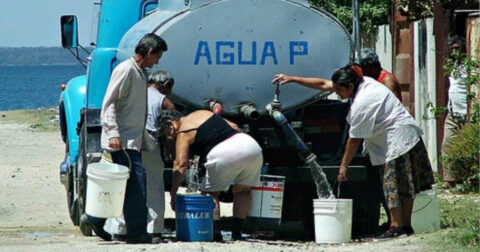
Like the other residents of the José Martí housing estate in Santiago, Cuba's second city, Rafael Gonzalez has grown used to the taps running dry.

"Sometimes water arrives only two or three times a month," says the 46-year-old restaurant worker, who often has to rely on what he collects in the two rusting oil drums parked on the balcony of his second-floor flat.

Now, however, change is in the offing. Fixing Santiago's defective pipelines and aqueduct is one of a number of projects being given priority as Cuba's Communist government ploughs billions of dollars into roads, electricity and water infrastructure.

José Martí and other Santiago barrios should benefit, for example, from a multi-million dollar restoration plan and Mr Gonzalez and his neighbours are looking forward to the improvement. "They say next year we will have water," says Rolando, a 52-year-old retired carpenter. "They are 'revolutionis ing' things."

"Revolutionising", however, turns out to be a slow process. Cuba's Communists are anxious to avoid the tumultuous transition experienced by the Soviet Union and – like their Chinese allies – are determined to hold on to political power. Nor, with their traditions of austere egalitarianism, do they have much appetite for the kind of market-based liberalisation that has taken place in China and Vietnam.

Even so, President Raúl Castro, who last month completed his second year at the helm of Cuba's economy, is determined to press on with changes designed to increase economic efficiency and improve living standards.

Under his stewardship – and especially since the permanent retirement in February of his older brother, Fidel – the government has admitted the scale of problems faced by ordinary Cubans and brought a more hard-headed approach to administration and economic management. Buoyed by trade and investment from China, Venezuela, Brazil and other emerging nations, the authorities have had money to make things better.

Indeed, the modest improvements promised in Santiago have already been delivered in some other parts of the country. The lights that went out during the special period of austerity decreed in the early 1990s after the collapse of the Soviet Union, then Cuba's biggest trading partner, are back on thanks to supplies of Venezuelan oil.

In Havana, the ugly converted articulated lorries known as "Camels" that until recently transported Cubans to work have been replaced by hundreds of modern Chinese buses. If Cubans book early enough they can even find seats on fast and comfortable coaches that now work routes between major cities.

There have been other changes, too. This year Cubans have been allowed to buy hitherto forbidden consumer goods such as computers, DVD players and mobile phones. The ban that until recently prevented Cubans from entering tourist hotels has been lifted and a new terrestrial television station broadcasts US dramas such as The Sopranos and Grey's Anatomy.

On infrastructure, investment levels that hovered around 10 per cent of gross domestic product for years are up to around 15 per cent, according to Alfredo Jam, head of macro-economic analysis at the economy ministry.

Much of this change reflects a sharp improvement in Cuba's external circumstances. Driven by demand from China, the price of nickel – Cuba's most valuable physical export – has surged higher, with revenues last year roughly four times higher than in 2002. Beijing has locked in supplies with a long-term agreement, helping Cuba pay for the buses as well as millions of dollars' worth of Chinese televisions, rice cookers and refrigerators.

Brazil and Iran have also offered credit lines, allowing Cuba to import more easily. Above all, Cuba's prospects have been transformed by its alliance with the radical leftwing government of Venezuela.

Cuba buys Venezuelan oil on concessionary terms. About 40 per cent of the bill is converted into a long-term, low-interest loan, while much of the remainder has been paid for by selling the services of some 30,000 doctors, dentists, nurses and fitness instructors to Caracas.

In a series of agreements signed last year, Cuba and Venezuela mapped out long-term co-operation that involves multi-billion dollar Venezuelan investments in Cuba's refining and petrochemicals industries and encompasses the production of everything from fertiliser to the plastic building materials being deployed in pilot housing projects – the so-called petrocasas (oil houses) – in Santiago and the southern city of Cienfuegos. "The relations we have with Venezuela are about economic integration," says Mr Jam. "We are looking at developing our two economies in a complementary way."

There has also been a shift in political style, partly linked to the change at the top. Fidel Castro has an almost obsessive belief in egalitarianism and, faced with difficulties, has often exhorted his people to greater sacrifice and commitment. By contrast, his brother is more prepared to countenance financial rewards for workers and businesses that deliver better results, even if this means accepting a greater degree of inequality.

Since the Cuban Revolution in 1959, this tension has been a constant in the political debate. But under Raúl, the balance has tilted away from idealism. As one European diplomat puts it: "Think of Cuba as if it were an old Ilyushin aircraft that Fidel Castro wants to fly to the moon. Raúl shares that ambition but he knows that unless the plane lands and essential repairs are carried out it will crash."

At the centre of the new president's practical concerns – voiced repeatedly in recent speeches – is low productivity in agriculture, construction and manufacturing. Cuba already has an internationally competitive state-run tourism sector, built during the 1990s by adapting management techniques learnt from western multinationals. A viable biotechnology sector, which exports about $300m (€204m, £161m) a year, is another product of this effort.

Over the past couple of years, Cuba has pursued the idea of selling medical services beyond Venezuela. Caracas still dominates but Cuban officials estimate that, of annual revenues of some $5bn, about a third comes from countries such as China and Algeria, where Cuba has built and staffed hospitals specialising in eye surgery.

However, the efficiency of domestically oriented sectors has lagged behind. This imbalance is reflected in Cuba's complicated exchange rate system and is responsible for a series of distortions in the economy. Whereas hotels and restaurants charge tourists in convertible pesos whose value is tied to the dollar, the domestic economy functions on much less valuable pesos. Cuba's average wage of about 430 pesos a month is nominally worth only about 17 convertible pesos, for example.

The problem is that this system distorts incentives, sucking labour out of farming and the building trades, and even creating shortages of teachers. Hundreds of thousands of Cubans work in the illegal black economy, much of it linked to tourism, where a casual tip can equal a day's wages.

Remittances mainly sent by Cuban-Americans in the US further complicate matters, undermining work incentives. Manuel Orozco, a remittances specialist at the Inter-American Dialogue think-tank in Washington, estimates that 25 per cent of Cuban families receive regular dollar payments from their families in the US, with total flows amounting to nearly $1bn a year.

The government has talked about extending the management techniques used in tourism, while the administration of agriculture and construction is being decentralised in order to bring bureaucrats closer to day-to-day decisions. More radically, Mr Castro seems prepared to break with long-established commitments to income equality and increase the country's low wage differentials in order to lift productivity. In one recent speech he claimed that equality meant equality of rights and opportunities, not of income.

At one level, that means being prepared to allow workers to earn bigger bonuses. At another it might involve modifying universal entitlement to social welfare. Much of this discussion is just beginning but it could, for example, involve the replacement of the hugely expensive rationing system – in which all Cubans receive the same monthly entitlement of basic foods – with a more targeted approach, similar perhaps to the conditional income transfer programmes successfully developed in Brazil and Mexico, in which welfare is made dependent on attendance at schools and clinics.

But there is much opposition to overcome. "I favour ending the ration but this is very controversial. There is very fierce debate about these things," explains one leading government adviser. In addition, the government is explicitly opposed to what it calls "shock therapy" – sudden policy changes of the sort implemented by several Latin American countries in the 1980s and 1990s.

Moreover, the authorities are still cautious about dealings with the private sector, limiting access to capital, technology and management know-how. Cuba has allowed foreign direct investment since the 1990s, developing an institutional framework that allows it to enter into joint ventures with private companies. But in recent years Venezuelan state companies have been the only sizeable investors.

Although the government wants to make more consumer goods available, reform in this area has been timid in the extreme. Mobile phones may be legal but Cubans face some of the highest costs in the world: ETECSA, the state-owned company, charges calls at the equivalent of a US dollar a minute.

There are signs too that the pace of change will slow further as Cuba adjusts to high food and energy prices. Mr Jam says that investment plans in areas such as housing and road repair are already being pared back.

The chances are, then, that life will improve but only at a snail's pace. Supported by the emerging market powers, the country will steer clear of the kind of crisis it faced in the 1990s, but popular expectations of more rapid change will be thwarted.

It is perhaps not surprising that there have been signs recently that the government has been preparing to dig in, reinforcing its disposition to defend Cuba's authoritarian brand of socialism and fight what Communist party ideologues call the "battle of ideas".

For all his fresh thinking, there is an occasional hint of steel about the new Cuban president. As he told one recent meeting of party officials: "When the difficulties are great, the greater the need for order and discipline."

Urban farms attempt to engineer an organic future

Beyond the neat lines of lettuce at the Alamar organic market garden and across the road leading to Havana, some new land has caught the eye of Miguel Salcines. As the 58-year-old farmer explains how he wants to start growing fruit and grazing sheep there, he seems every inch the ambitious rural entrepreneur.

But this market garden on the outskirts of the capital is a co-operative and Mr Salcines, its administrator, is also a government supporter and an official who wants to make the Communist system work better.

In fact, the success of the business that he and his 168 fellow workers have built up makes it something of a model for President Raúl Castro as he tries to get Cuba to produce more of its own food and reduce dependence on increasingly expensive imports. Cuba's food import bill is expected to rise to $2.55bn (€1.74bn, £1.37bn) in 2008 from $1.47bn in 2007.

Since establishing the co-op in 1997, Mr Salcines has seen it grow 100-fold. Sales of vegetables, herbs and ornamental plants have increased from 50,000 pesos to 5m pesos a year and productivity has risen sharply. Mr Salcines claims he is producing more than 180 tonnes of lettuce, tomatoes, cauliflowers and other vegetables a hectare, more than double that achieved on most Cuban farms. "We can get to 200 tonnes," he says.

Much is sold to the local population from market stalls but the co-op also counts Havana's top hotels among its clients, providing them with mint for mojito rum cocktails.

While Cuban state farmers and co-operatives can sometimes struggle to attract workers unimpressed by hard work and low wages, Mr Salcines finds labour easy to find. More than 60 new workers have joined in the past year, attracted by proximity to their homes and a payment system that recognises effort and commercial success.

Each fortnight the co-op hands out 50 per cent of its profits in the form of a bonus, with the amount depending on seniority and length of service. The average wage of 1,000 pesos per month is twice the Cuban norm. Among the recruits are highly skilled engineers and agronomists. "We have 17 university professionals and most of our employees are graduates," says Mr Salcines.

That technical expertise has helped the co-op develop the organic farming methods on which Cuba became dependent after losing access to Soviet oil, pesticides and fertilisers in the early 1990s. With Cuba keen to reduce dependence on hydrocarbons, there is heavy official support for organic methods. Alfredo Turro, 53, who also used to be an irrigation engineer, now spends his days rearing earthworms and creating humus. "Vegetables consume such a lot of nutrients. Unless we farm organically we can't use the soil so intensively."

The government is encouraging such experiments in "urban agriculture". Indeed, this year Mr Castro announced an ambitious decentralisation of the sector, breaking up more than 100 co-operatives in order to bring production closer to towns and cities and reduce distribution costs. In addition, the top-heavy agriculture ministry has set up 169 municipally-based offices.

Alcides López, the deputy agriculture minister, told the FT that "the [new] local offices are very close to the producers. They know where and when it rains. They'll know producers need a product or a resource so can act more quickly".

Idle land is to be offered to private farmers and co-operatives on extended leases, with more credit made available. Farmers, rather than bureaucrats, will be able to decide whether to reinvest.

Whether all this will be the answer to Cuba's agricultural difficulties is another matter, however. That is partly because of the scale of the needs. In 2006, for example, Cuba imported 66 per cent of products that provide protein and more than half of its basic grains, a greater dependence than at any time since the 1959 revolution, according to the Centre for Study of the Cuban Economy, a pro-government think-tank based in Havana.

Ideology could also limit success. Cuba's government remains reluctant to extend market mechanisms. Although the Alamar and other "urban farms" sell directly to the community through local markets, bigger producers – such as the state farms and rural co-ops – sell 80 per cent of their output at set prices to state-run warehouses that have traditionally been inefficient.

Although Cuba has signed a deal that will bring Brazilian technology to a pilot soya project, the country seems some way away from signing joint ventures with big private international agri-business concerns. Yet that might be the only way to revive the fortunes of the moribund and capital-intensive cattle rearing and dairy farming sector.

Many Cubans privately fear that bureaucracy will block success. Mr López is adamant that will not be so. "We are not magicians. We are in a rush but we are not desperate," he says. "The changes will be introduced gradually, without improvisation and without despair."

-----------

The Associated Press State & Local Wire

August 19, 2008 Tuesday 8:16 AM GMT

Ore. candidate defends trip to Cuba

SECTION: STATE AND REGIONAL

DATELINE: LAKE OSWEGO Ore.

Congressional candidate Mike Erickson estimates he spent roughly "a third" of his time distributing medical supplies during a trip to Cuba in 2004.

At a news conference arranged one day after The Oregonian newspaper published an article about Erickson's visit, the Republican said he brought 20 boxes of medical supplies to the Communist country and delivered them to aid clinics over two days.

"Maybe some people may have gone there for a different purpose, but not me. Mike Erickson went there truly to see and feel what the people in Cuba were going through," he said.

Erickson said he has receipts documenting the boxes of supplies but can't find them.

Traveling to Cuba is sharply restricted by the U.S. government. Erickson was part of a group that gave medical donations to get into the country, but the newspaper reported Sunday that he spent most of the week vacationing.

Erickson, for example, visited the Tropicana nightclub and attended Fidel Castro's Annual Gala Cigar Dinner and Auction.

Erickson faces Democratic state Sen. Kurt Schrader in the Nov. 4 election for the 5th Congressional District, which includes the mid-Willamette Valley.

He was introduced at the news conference by Brian Bittke, who is on the board of directors for Open Arms International, a Portland-based medical missionary aid group.

"Mike's a man with a heart for those in need," he said.

Erickson acknowledged attending the Castro cigar dinner, but said Castro did not attend. He said the parts of the trip that did not involve distributing medical supplies were educational.

"Every time I was at dinner, I would talk to the waiters and waitresses and say, 'Hey, you're young. What do you want to do in life?'" he said.

"The other two-thirds wasn't just leisure, or just whatever it was. I was constantly always asking, 'Hey, what's going on in your country here?'"

He said he returned with a renewed appreciation for life in the United States.

LOAD-DATE: August 19, 2008

------------

Líder de las Damas de Blanco abandona el movimiento

WILFREDO CANCIO ISLA

El Nuevo Herald

Una de las principales figuras del movimiento disidente Damas de Blanco, la periodista independiente Miriam Leiva, anunció el lunes su decisión de separarse de la organización y romper el compromiso con las declaraciones del colectivo.

"No mantendré la participación activa habitual en el movimiento Damas de Blanco, por lo que no estaré comprometida con sus decisiones y pronunciamientos. No realizaré declaraciones a nombre de las Damas de Blanco. Continúo considerándome con orgullo uno de los miembros fundadores de Damas de Blanco, y deseo los mayores éxitos en sus humanos y pacíficos esfuerzos'', señaló Leiva en una carta divulgada el lunes desde La Habana.

La disidente dijo que ha decidido dedicar mayor tiempo a escribir y que a partir de ahora sus actividades se concentrarán en el periodismo, labor que ejerce de manera independiente en Cuba desde 1996.

"Mantengo mi solidaridad y amistad con las mujeres que son vigiladas y hostigadas, únicamente por ser las voces de quienes han sido encarcelados injustamente y defender a sus familias, condenadas y sometidas a fuertes torturas sicológicas; muy especialmente aquellas que, aisladas en los pueblos de Cuba, sostienen una posición heroica'', agregó la misiva.

Leiva enfatizó que continúa comprometida con la liberación de los 75 prisioneros de conciencia de la llamada Primavera Negra del 2003, acontecimiento que marcó el nacimiento de las Damas de Blanco como un movimiento cívico de esposas, madres y familiares de los arrestados.

Esposa del economista disidente Oscar Espinosa Chepe, condenado a 20 años en la Causa de los 75, Leiva tuvo una activa participación dentro las filas del movimiento. Fue ella quien generó numerosas iniciativas en favor de la liberación de los prisioneros políticos cubanos, y elaboró llamamientos y cartas a jefes de Estado y organismos internacionales a nombre de la organización femenina.

Su participación en el grupo no decayó después que Espinosa Chepe quedó en libertad con una licencia extrapenal por motivos de salud, en noviembre del 2004.

Contactada telefónicamente por El Nuevo Herald, Leiva afirmó anoche que no tenía "nada que añadir a lo expresado en la carta''.

"Mi actitud no ha cambiado, sólo que hay etapas en la vida en que uno decide priorizar otras tareas por razones personales'', explicó la periodista. "Yo no empecé en la oposición en el 2003 ni voy a abandonarla tampoco ahora; mis actividades opositoras van a continuar''.

La decisión de Leiva se hizo pública coincidiendo con la celebración del encuentro mensual --conocido como Té Literario-- que las Damas de Blanco realizan en la vivienda de Laura Pollán, en Centro Habana.

"Esta decisión nos toma por sorpresa, no puedo explicarme por qué decidió hacer una carta pública, pues hablamos hace dos días y ella me dijo que quería venir al Té a conversarlo con nosotras'', relató el lunes Pollán, líder de las Damas de Blanco y esposa del prisionero Héctor Maseda, condenado a 20 años.

El lunes las Damas de Blanco realizaron su acostumbrado encuentro mensual --fijado siempre para el día 18-- con la asistencia de unas 26 mujeres, que viajaron desde varias provincias del país.

Pollán insistió en que "no existió ningún problema'' con Leiva, a quien agradeció su colaboración con la organización y le reconoció su derecho a apartarse del grupo "con la misma espontaneidad que nos sirvió para integrarnos''.

"Le estamos muy agradecidas, porque ella era una pieza clave a la hora de redactar documentos y enviar peticiones a personalidades y figuras mundiales'', señaló Pollán, quien convalece desde hace 13 días por quemaduras en su cuerpo tras un accidente casero.

La activista, quien ha sido criticada por las autoridades cubanas por recibir dinero de Estados Unidos, aseguró que "las Damas de Blanco están unidas y continuarán luchando hasta que existan presos políticos'' en la isla. Los reportes de organismos de derechos humanos sitúan en unos 300 la cifra de prisioneros cubanos por motivos políticos.

"No vamos a dejar de existir por mucho que el gobierno trate de atemorizarnos y hostigarnos'', manifestó Pollán. "No estaremos tranquilas hasta que los prisioneros no estén de regreso en sus hogares, de donde nunca debieron salir''.

En recientes declaraciones, Pollán ha defendido el derecho de su grupo a recibir dinero del exterior como un modo de supervivencia. Explicó que el dinero que envían organizaciones del exilio se divide equitativamente entre las familias de los presos.

Las mujeres --identificadas por los habituales vestidos blancos de sus integrantes-- planean continuar sus marchas públicas por las calles habaneras reclamando la liberación de sus seres queridos.

Reconocido como el más influyente bastión opositor surgido en Cuba en la última década, las Damas de Blanco obtuvieron el Premio Sajarov de Derechos Humanos 2005, otorgado por el Parlamento Europeo.

---------

POLÍTICA-CUBA: Damas de Blanco pierden a una de sus fundadoras

Reportaje de IPS        

Patricia Grogg 

LA HABANA, 18 ago (IPS) - Miriam Leiva, una de las fundadoras de las Damas de Blanco, anunció este lunes su separación de ese movimiento de mujeres familiares de opositores presos, para dedicarse al periodismo "independiente".

En la breve nota hecha llegar a algunos medios de prensa extranjeros, Leiva no explicó las razones de su decisión, y tampoco fue posible localizarla en su casa para obtener más precisiones. Ella es esposa de Óscar Espinosa Chepe, uno de los 75 opositores presos en 2003, excarcelado más tarde por razones de salud.

Tras insistir en que piensa dedicar mayor tiempo a escribir, la disidente aclaró que a partir de ahora deja de estar "comprometida" con las decisiones y pronunciamientos de las Damas de Blanco, aunque continuará considerándose "con orgullo" una de sus fundadoras.

En declaraciones telefónicas a IPS, Laura Pollán, una de las portavoces de las Damas de Blanco, dijo que ya conocía la decisión de Leiva. "Vamos a sentir su ausencia, porque es una persona muy preparada, pero respetamos su criterio", comentó.

Pollán agregó que la partida de Leiva no afecta la unidad de las Damas. "No ha habido choques ni contradicciones entre nosotras, que eso quede claro", puntualizó la mujer, esposa del disidente Héctor Maseda, sentenciado a 20 años de prisión en los juicios sumarios de 2003.

Leiva aclaró que continúa comprometida con la "liberación inmediata" de los 75 disidentes condenados a severas penas por actividades suversivas "bajo instrucciones de una potencia extranjera", según los cargos del gobierno. De ese grupo, 55 permanecen encarcelados.

Según Leiva, nueve de los excarcelados "con licencia extrapenal por motivos de salud, residentes en Cuba, pueden ser retornados a las cárceles en cualquier momento". Los demás liberados bajo esa figura judicial viven en el extranjero, excepto Miguel Valdés Tamayo, quien falleció en enero de 2007.

"Nosotras también seguiremos adelante. Mientras existan presos políticos habrá Damas de Blanco", aseguró Pollán, en cuya casa en La Habana se reúnen frecuentemente las esposas, madres y otras parientes de los disidentes encarcelados.

Estas mujeres, vestidas habitualmente de blanco, asisten cada domingo a misa en la Iglesia de Santa Rita, "abogada de las causas imposibles", y luego suelen caminar varias cuadras por la Quinta Avenida, en el sector oeste de la capital, en reclamo de la libertad de sus seres queridos.

En abril, Pollán y otras Damas fueron sacadas a la fuerza por una brigada femenina de la policía de un lugar cercano a la emblemática Plaza de la Revolución, donde intentaban interceder por sus familiares "personalmente" ante las autoridades.

Según el diario oficial Granma, esa operación estuvo encaminada a evitar un enfrentamiento con la población. En otras ocasiones, las Damas han sido rechazadas en la calle por personas afines al gobierno.

En el texto publicado por Granma en esa ocasión se calificó a las Damas de Blanco de "elementos mercenarios" que intentaban una "provocación burda y descarada" en los alrededores de la Plaza de la Revolución. También se las vinculó con sectores derechistas de la inmigración cubana en Estados Unidos.